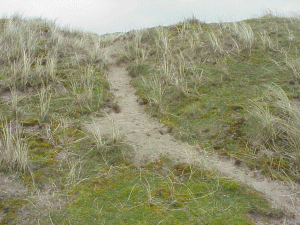
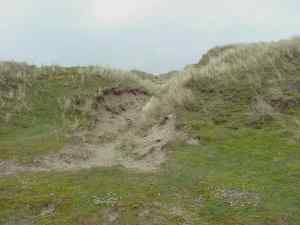
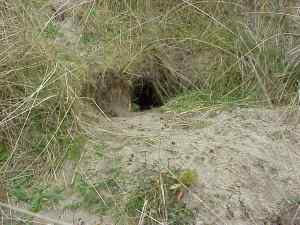
The dune system is a fragile one and even small amounts of damage can cause long-term problems. Humans wander onto and through the dunes in increasingly large numbers and small paths which wear through the vegetation cover soon turn into deep gullies as the wind uses the opportunity to carry away the sand. Rabbits in their hundreds dig large holes in the dunes. Eventually, large hollows, called blowouts, are formed and up to 50% of a mature dune may be lost. Plants die and due to loss of habitat, insects, amphibians, birds and animals also disappear.
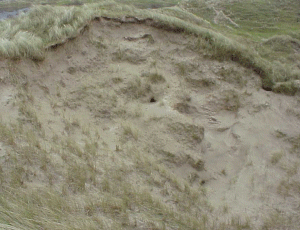
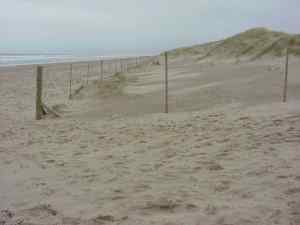
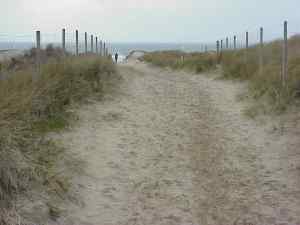
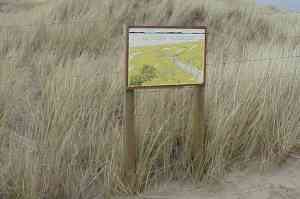
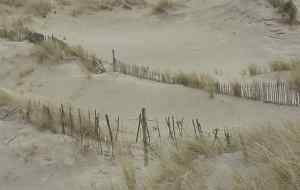
The dunes may eventually need to be protected by the local authority. This often means fencing off at least part of the dune system so that public access is restricted. This allows damaged dunes to recover and/or ecologically important sections to be protected. Public access to beaches may be via fenced-off pathways. Along the footpaths, information boards can be used to educate the public about why the dune system is important and how they can avoid damaging it. Blowouts can be repaired by trapping the loose sand with barriers - sometimes old christmas trees are used. Although the barriers are unsightly, they are eventually covered up and the vegetation re-establishes itself.


forwardFORWARD
backBACK


HomeRETURN TO Sand Dunes HOME PAGE
Copyright ©2000 David Rayner All rights reserved

Website hosted by: Easyspace