Solitary and Social Bees.
There is
some evidence that the first bees appeared in the Cretaceous
period which spanned some 70 million years, (about 146 million -
76 million years ago) There are not too many fossil records about
bees at that time, but there are those of Sphecid wasps, which
are generally believed to be the ancestors of present day bees.
Sphecid
wasps were originally predatory but during the passage of time
some of them developed a life favouring the collecting of pollen
and nectar. It is not known for sure how and why this change
occoured but it did. It is possible that they got the taste for
sweet nectar through eating aphids and the like, but it cannot be
known for sure. The collecting of pollen and nectar would be much
easier than hunting elusive prey, so perhaps the female wasps
decided to feed their larvae on that and the evolution began.,/p>
It
also helped by the growth of flowering plants which is a pre
requsite for the bees to develop. The oldest known fossil bee is
a stingless bee given the name Trigona prisca. It was preserved
in amber from the Upper Cretaceous period in New Jersey, from
about 96 - 74 million years ago. The increasing diversification
of flowering plants gives the best evidence that bees originated
during that period.
The
most known bees to the general public are the Bumble bees (bombus)
and the Honey bee (apis mellifera) but there are a wide
diversification of bees. They range in size from 1.5mm in some
tropical stingless bees to the carpenter bees which can be up to
30 - 40 mm long. The colours of bees vary from grey brown to
those tropical bees of bright metallic green, blue and bronze.
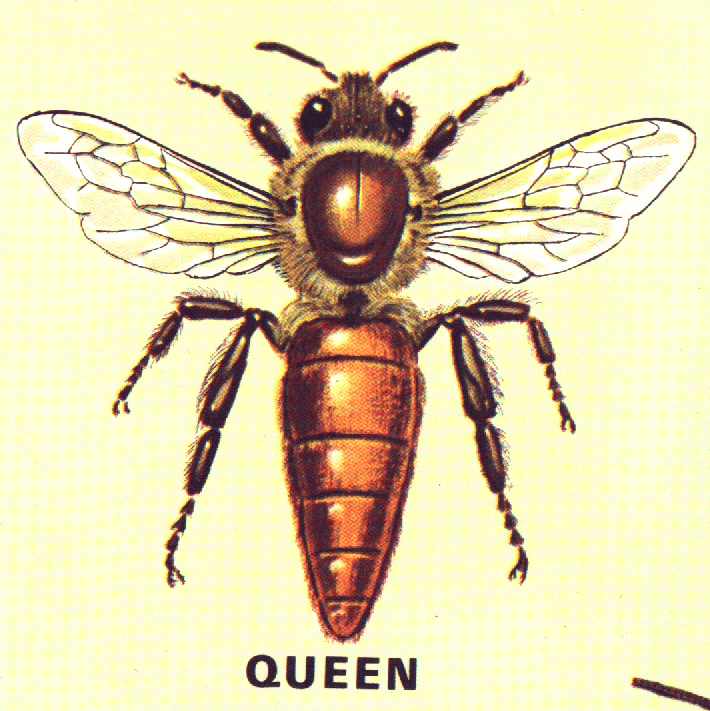
Note the long
tapered abdomen
Top of Page.....