Pollen

  • Pollen is the only source of nitrogenous food for feeding to bee larvae. It is collected by the foraging bee from the many flowers that abound in the countryside and towns. Not all plants are good for pollen gathering ,even though they need it for pollination

    To get the bees to do the pollinating for them the plant offers up a bribe in the way of Nectar, which is a sugar based sweetening agent secreted by the plant.With reference to the Honey bee (mellifera. mellifera) not all plants are good nectar suppliers.

  • Plants also rely on other types of bee such as the Bumblebee (bombus) and various other solitary bees and insects. Pollen is especially needed in the early spring when the Queen starts to lay and young larvae need feeding. In some countries which have cold springs and there is a lack of pollen to be gathered the beekeeper must feed a pollen substitute but in the British Isles, especially in the southern and south western regions there is normally enough pollen available. Such plants as Dandelion- crocus coltsfoot - hazel - and willow allow the bee colony to get enough pollen to enable the colony to build up. It has been assessed that a colony will need about 44lb of pollen per season, counting 10 loads per bee, then it will take approx 4500 bees to supply the need of the hive.

  •  
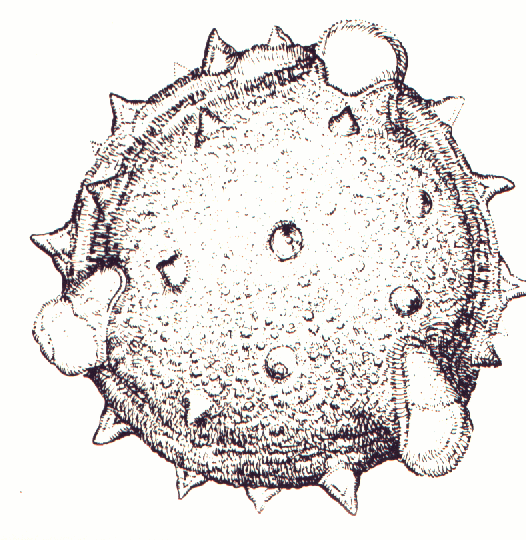
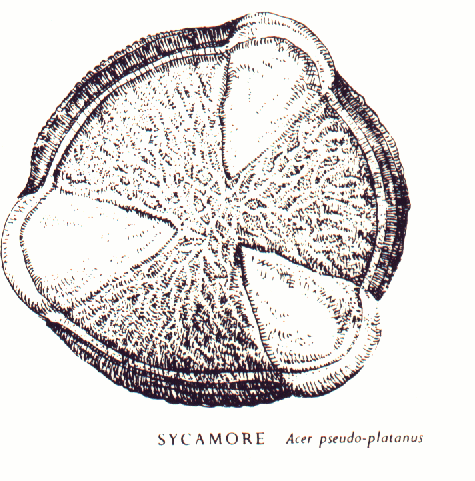
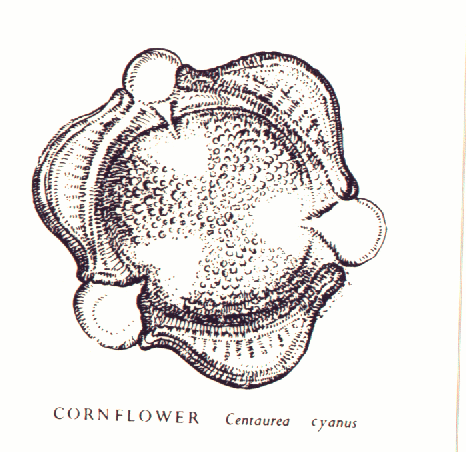
  • Pollen grains are microscopically small and vary immensly in colour and form. They also vary in their chemical contents, some are much oilier than others. The basic constituents are Proteins. Starch, Carbohydrates. Vitamins. and Mineral matter. Though pollen is stored in the hive to tide the bees over the wintering period, if it is kept too long then the vitamin value decreases on dry storage.

  •  


    To Top of Page