
 ,
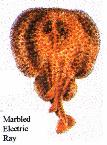
and they were thought to have been discarded by fishermen for one had been
gaffed. One was a Thornback Ray, Raja clavata which is found from northern
Norway to as far south as tropical and southern Africa. The other however was a
rarer and usually more southern species a Marbled Electric Ray Torpedo
marmorata a Mediterranean and African coast species, but has been recorded
before on the other side of the English Channel. They have a powerful electric
organ on each side that can generate up to 220 V which is used to stun prey and
for defense, so it may be wise to keep your distance if you see one of these.
,
and they were thought to have been discarded by fishermen for one had been
gaffed. One was a Thornback Ray, Raja clavata which is found from northern
Norway to as far south as tropical and southern Africa. The other however was a
rarer and usually more southern species a Marbled Electric Ray Torpedo
marmorata a Mediterranean and African coast species, but has been recorded
before on the other side of the English Channel. They have a powerful electric
organ on each side that can generate up to 220 V which is used to stun prey and
for defense, so it may be wise to keep your distance if you see one of these.
There are 33 known species of Seahorses worldwide, and many of these are sliding toward extinction. More than 20 million, both dead and alive, are sold each year by at least 52 countries, for traditional medicines or as pets or dried as souvenirs. In Hong Kong where Chinese medicines are popular, seahorses fetch a higher price than silver. The most threatened is the South African Knysna Seahorse and it has recently been listed as an endangered species. It is restricted to estuaries and has only ever been found in four locations, but can now only be found in two of the South African estuaries. Like many other endangered animals in this world they may only eventually survive in Zoos or Aquariums, for London Zoo has
 successfully bred 700 baby Knysna
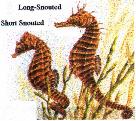
Seahorses, the latest arrivals being born earlier this year. Long Snouted
seahorses Hippocampus ramulosus live around Devon and Cornwall and up as far as
Dorset. Mike has occasionally brought them up in his crab-pots, but you are
more likely to find them in shallow and sheltered waters like the Fal Estuary,
and in Eel Grass beds and this is the species you are most likely to see. The
Short Snouted Seahorse Hippocampus hippocampus lives around the Channel Islands
and has been caught off our coast. If we are going to find ways of protecting
them, we need a lot more information about seahorses so please report any
sightings.
successfully bred 700 baby Knysna
Seahorses, the latest arrivals being born earlier this year. Long Snouted
seahorses Hippocampus ramulosus live around Devon and Cornwall and up as far as
Dorset. Mike has occasionally brought them up in his crab-pots, but you are
more likely to find them in shallow and sheltered waters like the Fal Estuary,
and in Eel Grass beds and this is the species you are most likely to see. The
Short Snouted Seahorse Hippocampus hippocampus lives around the Channel Islands
and has been caught off our coast. If we are going to find ways of protecting
them, we need a lot more information about seahorses so please report any
sightings. 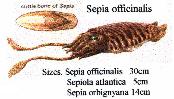
Cuttlefish gather together for mass spawning in the spring and early summer. After spawning the females die, and eventually their internal shells float to the surface and often end up on our beaches. Early in May Mike found Mounts Bay and the south Penwith coastal area covered by hundreds of these cuttlebones and there were some smaller ones among the shells of Sepia officinalis which are about 18cm long. Sepiola atlantica our other local species is too small to have a cuttlebone so these other small cuttlebones have to be from another species probably, Sepia orbignyana .
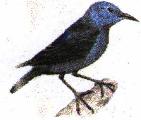
Not only sea creatures from further south are turning up in this area, but some birds also, the most recent being a Blue Rock Thrush, seen on rocks down by the sea near Geevor on the 17th May. The Blue Rock Thrush is normally found in rocky places from mountain tops to sea level in Spain, Italy and the southern coast of France as well as further east along the Mediterranean coastline and mountainous areas.
Bottlenose Dolphins have been seen during May from single animals up to pods of 9. That particular pod was following a gig across St.Ives Bay on the 8th. Benty has been seen with one other dolphin mainly in the Fowey area, but pods have been seen all around the coast from Newquay on the north coast to Salcombe in south Devon as well as from the Scillonian and in the Scilly Isles. Basking Sharks are returning and 34 were seen during May, mainly in ones or twos but there was a group of 4 seen off Porthgwarra. The first report of an Ocean Sunfish came in from Mike, that was on 14th May off Lamorna, and a Killer Whale was seen to breach off Godrevy on the 27th. I heard that the local fishermen were happy at this sighting, for they hoped that it would catch some of the local seals.
