 Conservation
| Conservation
|
|

|
|
| October '99 |
| The World's oceans are disappearing down the plug hole, scientists claim. They say that eventually our blue planet will resemble the dry and barren surfaces of Mars, who's oceans disappeared millions of years ago. When earthquakes occur under the oceans, billion 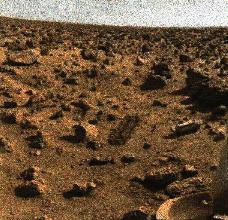 s of gallons of
sea water seep into the mantle through the massive fault lines that split the
earth's crust. An estimated 1.12 billion tons of water slips through the gaps
each year, the equivalent of losing the volume of the English Channel every
1500 years. Geologists had always assumed that this water was eventually
returned from the mantle, the red rocks below the crust, mostly as steam
brought to the surface during volcanic eruptions, but Japanese scientists have
redone the calculations and worked out that the oceans are leaking water into
the Earth's mantle five times as fast as it is being replenished. There is
however no need to start sharing your bath water yet as the process will take a
billion years. s of gallons of
sea water seep into the mantle through the massive fault lines that split the
earth's crust. An estimated 1.12 billion tons of water slips through the gaps
each year, the equivalent of losing the volume of the English Channel every
1500 years. Geologists had always assumed that this water was eventually
returned from the mantle, the red rocks below the crust, mostly as steam
brought to the surface during volcanic eruptions, but Japanese scientists have
redone the calculations and worked out that the oceans are leaking water into
the Earth's mantle five times as fast as it is being replenished. There is
however no need to start sharing your bath water yet as the process will take a
billion years. Estimates of rising sea level over the next hundred years may also have to be revised because of the rapid destruction of Antarctic ice shelves. Global sea levels have risen by 27cm over the last century, and are expected to rise another 50cm in the next 100 years as glaciers melt and warmed sea water expands. Such a r  ise may be enough to break through many coastal sea
defences. By the middle of the next century the Thames Barrier may have to be
raised 300 times a year. Newly emerging data about the Antarctic ice shelves
show that their rate of destruction, which has been going on for the last 100
years, is accelerating The Larsen Ice Shelf B collapsed in 1995 losing 1,300
square kilometers in under 50 days, and now concern is growing about the
Western Antarctic Ice Shelf, if that were to collapse the expected rise in sea
level could double in the next century. ise may be enough to break through many coastal sea
defences. By the middle of the next century the Thames Barrier may have to be
raised 300 times a year. Newly emerging data about the Antarctic ice shelves
show that their rate of destruction, which has been going on for the last 100
years, is accelerating The Larsen Ice Shelf B collapsed in 1995 losing 1,300
square kilometers in under 50 days, and now concern is growing about the
Western Antarctic Ice Shelf, if that were to collapse the expected rise in sea
level could double in the next century. A four man submersible has been used to make 3-D films 1000ft deep along the ocean bed around the Galapagos Islands. During their 14 week mission the team discovered dozens of new marine species including a new type of Sea Bass, an unusual Wrasse, a striped cleaner fish, a cat shark and several scorpion fish as well as new types of sponges and urchins.. The 3-D films will eventually be shown in cinemas around the world. Don't miss a chance to see this if you see it advertised. 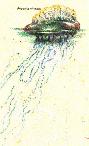 Recently there have been more than 20 Portuguese Man-of-War discovered off west country coasts many of which have been washed up on Cornish beaches. You would be well advised not to swim too close to these creatures for they have tentacles which can grow up to 35ft long, that can inflict a serious wound. When the tentacles touch something they can fire barbs that can penetrate rubber gloves, so your dive suit may be no protection, and the poison injected is 75% the strength of cobra venom. They are not jellyfish, as is commonly thought, Jellyfish are in the Class Scyphozoa whereas the Portuguese Man-of-War is in the Class Hydrozoa, Order Siphonophora, neither is it a single creature, but a colonial animal, a complex association of individuals. The Bottlenose Dolphins have returned, there were a dozen or more sightings around Cornwall in September, there was a pod of about 8 around Penzance harbour mouth from the 8th to 10th but since that time most sightings have been along the north coast. 2 Pilot Whales have been seen, 2 Leatherback Turtles and 3 Sunfish.. An unusual catch by MFV Jacqueline was a Slipper Lobster, Scyllarus arctus off the Wolf Rock, being only the second record this century.  Conservation Officer Raymond Dennis |
|