
As the colder weather approaches, horse owners turn their minds to how their horses will cope.
The simple fact is that there is no one winter routine that I can recommend; all depends on the breed of horse and what he has been used to as well as the amount of shelter available.
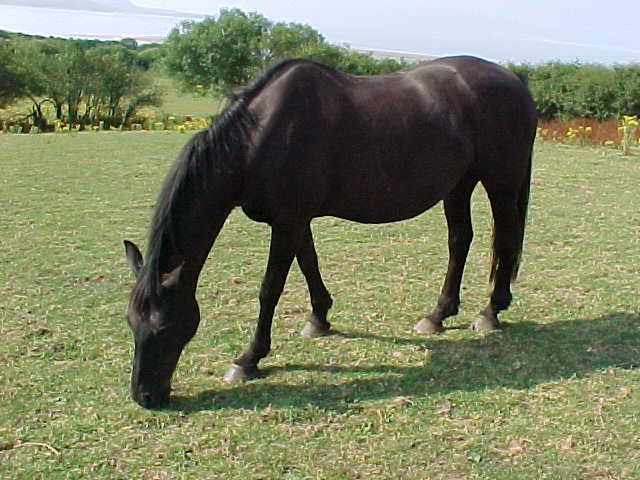
As a general rule, native breeds winter out, many without a rug. If there is a lot of natural shelter such as trees and hedges or even a man made shelter in your field, your native horse should be happy.
In the autumn you will note that your horse's coat changes. He becomes woolier to prepare him for the cold weather. If he is a native, such as a cob or a highland or fell pony, his coat will become quite thick and long. Don't apply your ideas of comfort to your horse - he will be happier out in the elements than in a stable 24 hours of the day if he is wel-equipped for cold weather.
More delicate breeds such as thoroughbreds do winter out in areas where there is a lot of shelter but your horse will need to be well-rugged. The thinner coats and skins of TB's makes them more susceptible to the cold. There are lots of rugs to choose from; visit your favourite tack shop to see the range available, and remember, that smart looking rug on display will look a lot less smart when your horse has dragged it through a few bushes and rolled it in a few mud puddles so don't go mad on looks - go for efficiency.
Heavy rain is actually more of a problem than cold weather. A horse will roll in mud to put an extra layer between him and the cold but heavy rain is a miserable business; as well as being cold it also washes off the protective mud layer. Many horses are rugged-up to avoid the chances of catching rain scald - a skin complaint that leaves small scabs. We have a lot of rain here in Wales, but there are wetter places!
If you have to stable your horse, be sure to feed him correctly and try to exercise him daily - he will be very excitable to ride if he is stabled and exercised only on weekends!
Stable boredom can be a problem so provide him with a few diversions - a large swede is paletable and will take a long to time to eat. There are also commercial "toys" on the market.
Feeding in winter is very important. You will already know that your horse's energy levels can depend on feeding. If he is wintered out, watch out for weight loss. It's not usually a problem for native breeds which tend to gain weight easily to prepare for lean winters. They can afford to lose a few pounds! However, do watch that the weight loss isn't too severe.
In short, keep your horse out as long as you can and if he is a hardy native breed leave him out all winter unless the weather is unusually severe. Stabled horses need amusement and careful feeding. And remember, while a wintered out horse needs to be brought in and dried off before he can be ridden, stabling a horse brings with it its own problems!