 |
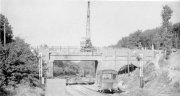
The crane in position on the
Iron Bridge during the work in 1953/4 The green rail cars seen in
the picture were used for transportation by the workers, the other
line being used by the trains. |
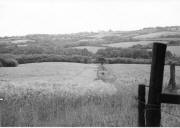 |
The oak tree standing in the
field that the crane was brought down - it was cut down some years ago.
The field was sometimes used to grow crops and on other occasions for
cattle with an electric fence running the length of the field
alongside the footpath.
This view in 1964. |
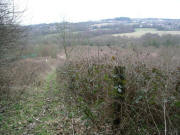 |
This is the same view across
the field on 13th February 2004, the previous picture was in 1964, 40
years earlier. The fields are no longer used for crops and cattle and are
reverting to scrubland.
The oak tree that stood in the field cut down several years earlier.
Bushes now line the path on the field side and a stream the other. |
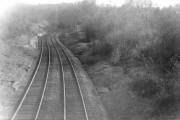 |
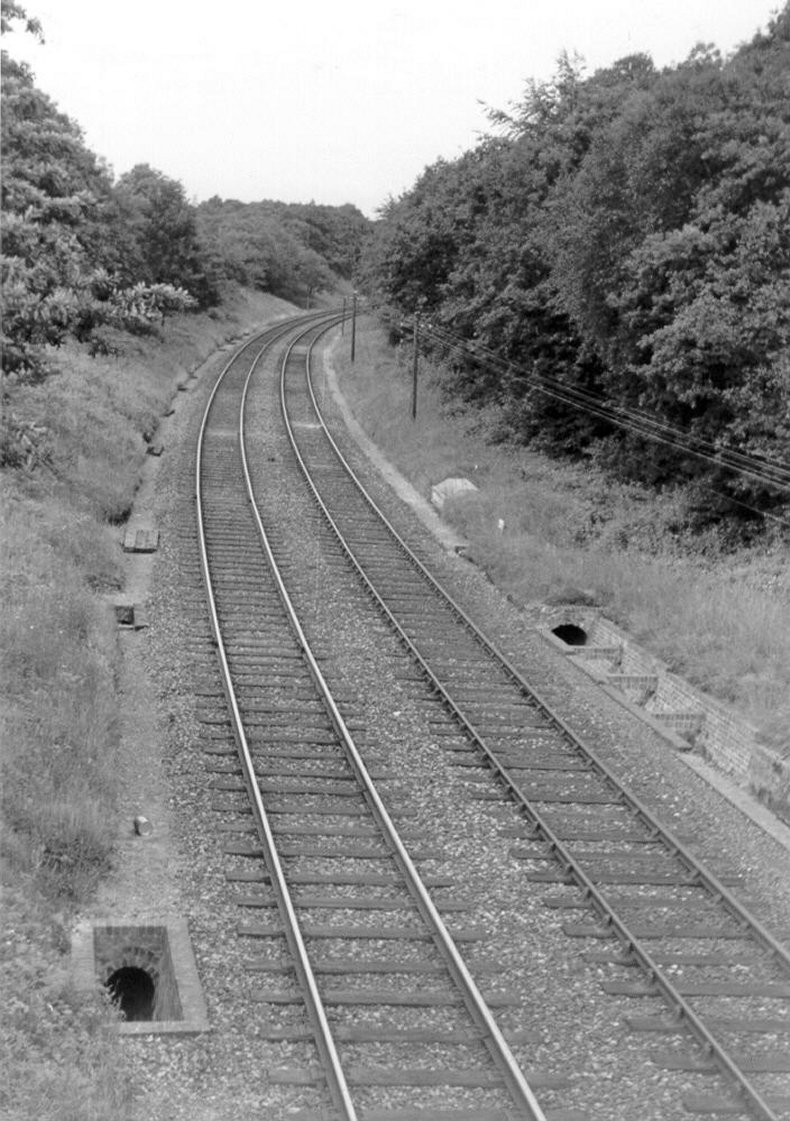
From the
Iron Bridge looking towards Ore tunnel three years after the
engineering work, taken on Sunday 27th April
1958. The line now restored to normal two track working. |
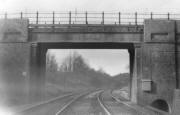 |
The Iron Bridge seen from
the track, again on 27th April 1958.
The iron sides, destroyed during the work on Ore tunnel replaced with
a fence.
The path across the bridge is full width still at this time. |
 |
View across the top of the
bridge taken on 15th June 1959, a year later,
looking in the direction of Rock lane
|
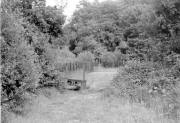 |
This view across the bridge
was taken in 1964, as you approach the bridge from Coghurst Drive,
there is a footpath to the left that runs through the woods. |
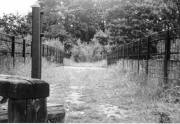 |
A closer view of the bridge
taken on the same day, the stile on the left by-passed, there was a
fence once but it has now been removed.
This is looking in the direction of Rock Lane. |
 |
Looking towards Ore tunnel
from the Iron Bridge, the old telegraph poles and lines that ran along
the sides of many lines can be seen in this picture, two un-insulated
wires for each telephone. The ditch on the left side of the track
carries the water from the streams that converge at a point close to
this side of the tunnel. Strangely, a stream from Rock Lane is
piped under the bridge to discharge on the other side, it then runs
under the path from the drive, and next through a brick culvert under
the path that leads through Coghurst Woods. |
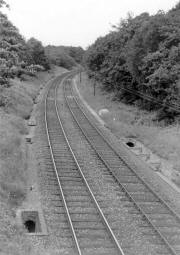 |
Again 1964, looking along
the tracks in the direction of Rye and Ashford. The ditch from ore
tunnel, seen on the right here, goes underground, then a brick culvert
takes it under the track and it discharges in the woods, joined by the
stream from Rock lane to form the source of another stream that runs
through the woods and then on for many miles joining Sallor stream at
Three Oakes, this runs into Doleham Ditch and eventually the River
Brede.
To complete this circle, water is pumped from the River Brede to
holding tanks at North Seat, these are sometimes discharged into the
stream that runs under the Iron Bridge! |
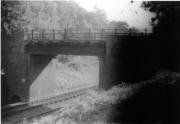 |
This picture of the Iron
Bridge in 1964 is taken from another well used path that ran from
Coghurst Drive to the bridge, it was taken through the mesh fence that
ran along the trackside. |
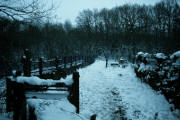 |
On a snowy Sunday morning
(18th February 1979), I took a walk through the woods, only to find
the camera wasn't working, so after changing the camera body for
another I repeated the walk taking the pictures again!
This is the view across the bridge once more. |
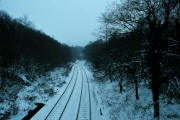 |
Looking towards Ore Tunnel
once again, the tunnel runs under The Ridge close to Ore Village,
there is an air vent between Frederick Road and Malvern Way.
The line emerges into Ore valley and Ore Station, then through Mount
Pleasant tunnel, over Queens Road and on to Hastings Station. |
 |
In this direction the line
continues on to Three Oakes station, Doleham Halt, it passes the site
of Snailham Halt, long since closed and demolished, and then on to Rye
and Ashford. |
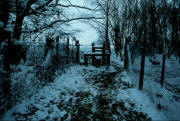 |
Crossing the Iron Bridge,
before you reach the three fields that lead to Rock Lane you first
need to negotiate a usually muddy stretch of path, this 1979 picture
shows the stile that separates the railway property from the fields. |
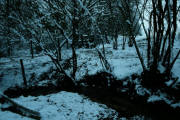 |
The stile is seen again
here, looking across the stream from Rock Lane.
The path used to follow an unofficial route through three fields,
reaching Rock Lane opposite "Brackendale". It now follows its correct
route as the unofficial path has been closed and built over. |
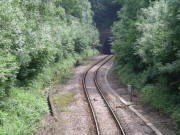 |
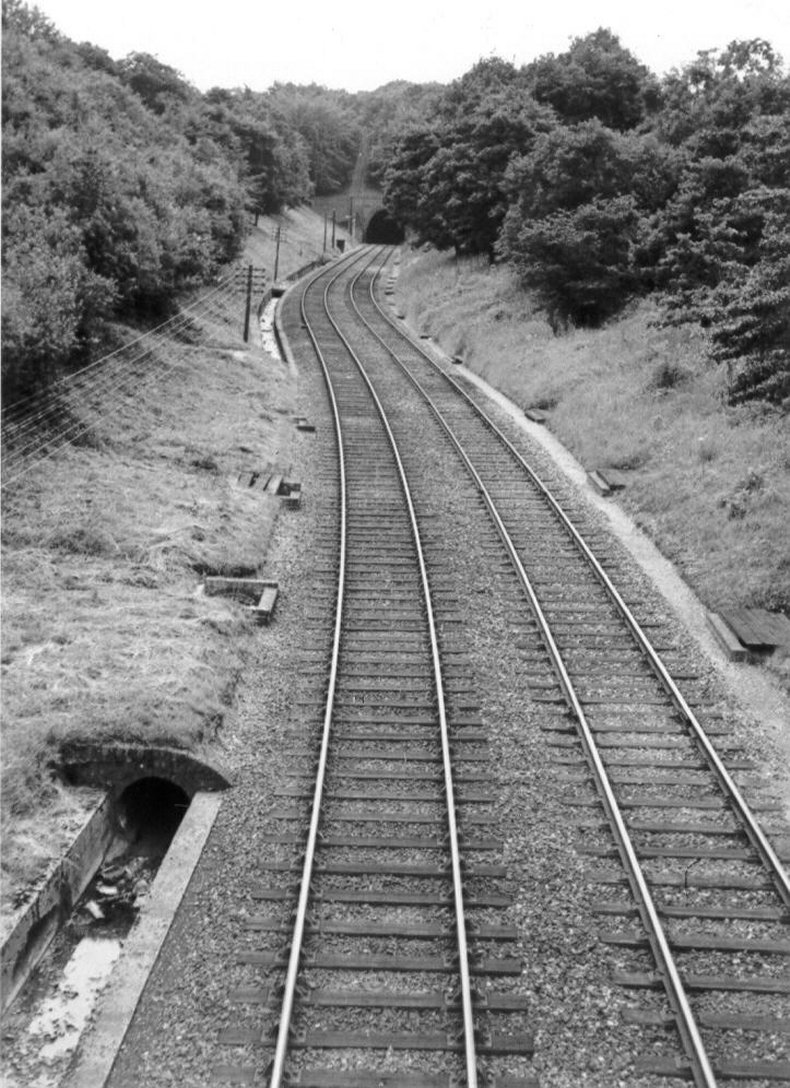
Ore Tunnel once again, some
46 years later than the first view above, this was on
6th June 2004. The line is now single track and the telegraph
poles and wires have gone, some years earlier one of the telephone
pole tops was lying under the side arch of the bridge. |
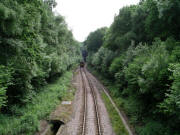 |
One of the trains from
Ashford approaches Ore Tunnel in this picture on its way to Hastings
at 2.57pm on Sunday 6th June 2004 |
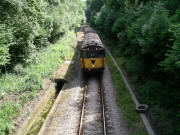 |
Replacement class 171 trains are on order, but at this time the line
was still being operated by ancient slam-door stock. In this picture
you can see class 205/0 (3H) No 205001 as it approaches the Iron
Bridge on its way back to Ashford, both this and the next picture
taken at 3.25pm. on the same June day. |
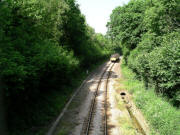 |
205001 heads off to Three
Oakes, Rye and Ashford again. Trains are timetabled to arrive in
Rye at the same time from both directions as it is the only passing
place on the single track section of the line. |
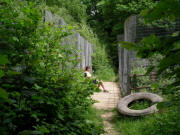 |
The view across the bridge
once again looking towards Rock Lane, these days the bridge has been
reduced to half its original width, exposing the pipes that carry the
stream across the bridge. |
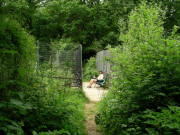 |
Looking across the bridge in
the opposite direction towards Coghurst Drive, the stream crosses on
the left but is hidden by vegetation in this picture. |
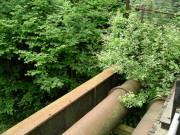 |
These are the pipes that
take the stream across the bridge, the old wide bridge would have
covered them. |
 |
The path from the bridge
looking towards the fields leading to Rock Lane in June 2004.
Wooden decking constructed over one of the muddiest areas. |
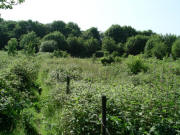 |
This is the path across the
field from the bridge to the Drive, quite a change from the 1964
picture above looking down the same path. |
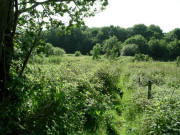 |
Another view of the same
path, both pictures on 6th June 2004, the fields are disused
scrubland, and behind on the right a "new" hedge divides the field and
path; there is a stream to the left. |