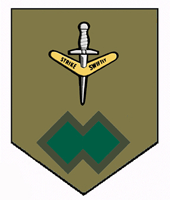
by A. Gubler
Introduction
The Australian military presence on
Earth and within the Sol system is large and extensive, with Terran
conflict being the most likely source of threat to the
Narrative
Command Candidate Leader Miriam Badran banged the battle command portacomp
in its olive green pouch against the rigid composites of her combat
helmet. The screen was still a static filled mess; well, she thought,
like they teach you in the ADF Academies, its time to get serious. She
let the portacomp fall to the leaf strewn
ground where she crouched behind a stone wall beside an old assattha tree. Then removing her F76 “four-point-five
millimetre” from its holster she reversed it in her hand to hold it
by the enlarged trigger guard/forward grip and then whacked the portacomp
like a hammer. The screen became clear and the targeting map was suddenly
legible with her much needed call for fire overlay outlined in bright
red.
Around her in the out buildings of a once moderately
successful but now deserted Hyderabadi farm
deep in the
The intercom in her helmet beeped the tune of
the hour to indicate an incoming de-scrambled message. The distinctive
Indian sing-song accent of the patrol’s Chief Leader Singh came over
the radio, “Miss Badran please, fires on that sniper
would be much needed. Now thankyou.
Over.”
As if on cue a 20-mm APHE hit the assattha tree behind her showering her position with its broad leafs, “state of
enlightenment my arse…” she muttered before
depressing the coms tab on her collar-bone
mounted suit’s portacomp.
“Snapping it now Chief. Over.”
“Very well Badran but
make it hasty they may find their luck and our range. Out.”
With her battle command portacomp
operable it was a simple matter of raising the counter-battery microphone
that every FO carried on its 2-m mini telescope. The sensor and its
software quickly located the source of the firing and with the terrorist
squad not even using acoustic decoys it was a simple location plot.
The patrol had an allocated fire support element and at her command
they received the call for fire over the satcom.
Within a heart beep her combat helmet’s HUD warned
of incoming air support. Crouching even closer to the base of the wall
her portacomp indicated that about 10 klicks away a Kargon strike fighter from the “Green-Ghosts” of Air Command’s 93 Squadron had
responded to the call for fire. Without anymore warning two supersonic
missiles armed with thermobaric warheads fell upon the vicinity of the
rebel autogun nest. The over-pressure from the resulting explosion
blew the rest of the assattha tree’s leaves of its
branches, though it would be a long time before any of them would fall
on Miriam.
As the shock wave of the explosions and the twin
sonic booms echoed away Miriam peaked over the stone wall. A huge chunk
of once vibrant green jungle had been vapourised leaving an odd looking
semi-circle of burnt jungle 200-m across.
“Well that might have got em.”
Extract from “Jungle
Patrol Leader” by Chief Leader (Retired) Miriam Badran
MG, Southern Cross University Press, Port Bagaaybila, 2301
Corps Troops
1st Division
6th Division
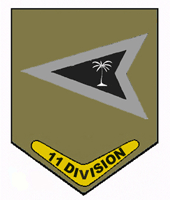
11th Division
28th (Airmobile Infantry)
Brigade
Corps Troops
2nd Division (Reserve)
7th Division (Reserve)
10th Division (Reserve)
38th (Armoured) Brigade
(Reserve)
54th (Infantry) Brigade (Reserve)
60th (Airmobile Infantry) Brigade (Reserve)
14th (Regional Force) Division (Reserve)
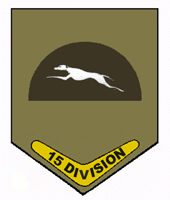
15th (Regional Force)
Division (Reserve)
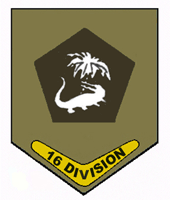
16th (Regional Force)
Division (Reserve)
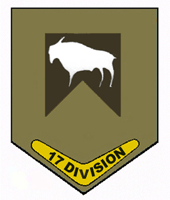
17th (Regional Force)
Division (Reserve)
Under the command of Corps Commandant
Louis McCracken 3rd Corps is the full-time regular FD COM force for
the Earth Theatre. The formation is a fully equipped mechanised combat
force tasked with the defence of continental
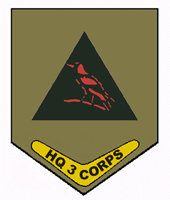

Corps troops comprise a number of independent specialist units and four supporting groups. These units and formations come directly under the command of HQ 3rd Corps but are sometimes assigned to other commands as needed. The independent units consist of reconnaissance, engineering and operations assets. For reconnaissance the corps has a highly mobile long range armoured hovercraft unit and a Special Forces element. GSU (“G” Special Unit) is a 3rd Corps’s SASR company sized combat reconnaissance force. This Special Forces unit usually operates in small teams behind enemy lines finding targets for long range strikes and conducting general intelligence gathering. The unit can also be assembled for high value attacks requiring the most elite of infantry. While all units are trained and equipped to survive attacks by weapons of mass destruction (Nuclear, Biological, Chemical and Electromagnetic) the corps has a specialist unit for dealing with these weapons. This Corps of Engineers unit conducts both reconnaissance and incident response roles.
2nd (Long-Range
Reconnaissance) Squadron, Cavalry Regiment of Australia
Corps Engineering (Amphibious) Unit 142, Corps of Engineers
Corps Engineering (Bridging) Unit 143, Corps of Engineers
Corps Engineering (Construction) Unit 144, Corps of Engineers
Corps Engineering (Terminal) Unit 145, Corps of Engineers
Corps Engineering (NBCE Defence) Unit 146, Corps of Engineers
Corps Operations (Intelligence) Unit 135, Corps of Operations
Corps Operations (Electronic Warfare) Unit 136, Corps of Operations
Corps Operations (Civil Affairs) Unit 137, Corps of Operations
GSU, Special Air Service Regiment
Operational Artillery Group 6
This group is the operational artillery
formation of 3rd Corps and is headquartered at ADB
18th (Corps
Operational)
21st (Corps Operational)
43rd (Corps Operational)
68th (Corps Operational)
106th (Tactical
Target Locating)
190th (Operational Target Locating)
Tactical Artillery Group 11
This group is the tactical artillery
formation of 3rd Corps and is headquartered at ADB
156th (Corps
Tactical)
157th (Corps Tactical)
159th (Corps Tactical)
160th (Corps Tactical)
168th (Heavy Tactical)
189th (Heavy Tactical)
Strike Aviation Group 4
The powerful SAG-4 is located at ADB
Woomera in
Strike
Aviation Unit 147, Corps of Aviation
Strike Aviation Unit 148, Corps of Aviation
Strike Aviation Unit 149, Corps of Aviation
Strike Aviation Unit 150, Corps of Aviation
Strike Aviation (Forward Air Control) Unit 151,
Corps of Aviation
Strike Aviation (Air Defence Suppression) Unit
152, Corps of Aviation
Lift
Aviation Group 7
This group is the transport aviation
formation of 3rd Corps and is based in ADB
Lift Aviation
Unit 161, Corps of Aviation
Lift Aviation Unit 162, Corps of Aviation
Lift Aviation Unit 163, Corps of Aviation
Lift Aviation Unit 164, Corps of Aviation
Lift Aviation (Heavy) Unit 165, Corps of Aviation
Lift Aviation (Heavy) Unit 166, Corps of Aviation
Headquartered at ADB Hunter
near
29th (Operational)
60th (Operational)
84th (Air Defence)
4th (Reconnaissance) Squadron, Cavalry Regiment of
10th (Assault) Battalion, Australian Rifles
Division Engineer Unit 101, Corps of Engineers
Division Operations Unit 101, Corps of Operations
Division Aviation Unit 101, Corps of Aviation
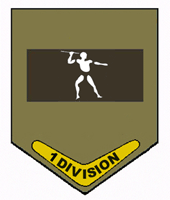
3rd (Airmobile Infantry) Brigade
The Parahawk
Brigade is a rapid deployment airmobile infantry formation based
at ADB
101st Battery,
Regiment of Australian Artillery
2nd Battalion, Regular Australian Regiment
6th Battalion, Regular Australian Regiment
5th Battalion, Parachute Regiment of Australia
6th Battalion, Parachute Regiment of Australia
Brigade Engineer Unit 3, Corps of Engineers
Brigade Operations Unit 3, Corps of Operations
Brigade Aviation Unit 3, Corps of Aviation
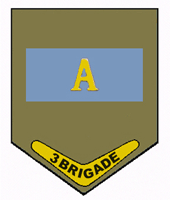
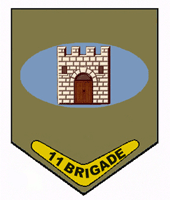
11th (Armoured) Brigade
The Fortress Brigade is an
armoured hovercraft formation based at ADB Point Cook near
81st
8th Squadron, Victorian Mounted Rifles
13th Squadron, Victorian
Mounted Rifles
40th Squadron, Armour Regiment of New
Brigade Engineer Unit 11, Corps of Engineers
Brigade Operations Unit 11, Corps of Operations
Brigade Aviation Unit 11, Corps of Aviation
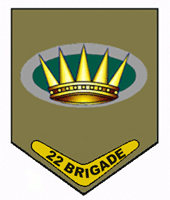
22nd (Infantry) Brigade
The Crown Brigade is a mechanised
infantry formation based at ADB Holsworthy in
30th Battery,
Regiment of Australian Artillery
1st Battalion, New South Wales Regiment
2nd Battalion, New South Wales Regiment
53rd Battalion, New South Wales Regiment
Brigade Engineer Unit 22, Corps of Engineers
Brigade Operations Unit 22, Corps of Operations
Brigade Aviation Unit 22, Corps of Aviation
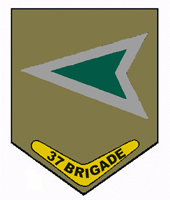
37th (Armoured) Brigade
The Green Arrow Brigade is
a rapid deployment armoured hovercraft formation based at ADB Woomera
in
191st Battery,
Regiment of Australian Artillery
18th Squadron, Cavalry Regiment of Australia
30th Squadron, New Canberra Guides
38th Squadron, New Canberra Guides
43rd Squadron, New Canberra Guides
Brigade Engineer Unit 37, Corps of Engineers
Brigade Operations Unit 37, Corps of Operations
Brigade Aviation Unit 37, Corps of Aviation
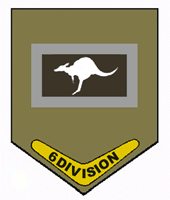
The Bardia
Division is the regular covering force for the north western corner
of the Australian continent and has its headquarters located in ADB
22nd (Operational)
Battery, Regiment of Australian Artillery
39th (Operational) Battery, Regiment of Australian
Artillery
137th (Air Defence) Battery, Regiment of Australian
Artillery
35th (Reconnaissance) Squadron, Australian Mounted
Bushmen
30th (Assault) Battalion, Australian Rifles
Division Engineer Unit 6, Corps of Engineers
Division Operations Unit 6, Corps of Operations
Division Aviation Unit 6, Corps of Aviation
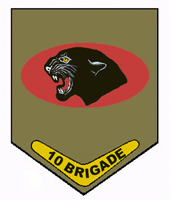
10th (Armoured) Brigade
The Leopard Brigade is an armoured hovercraft formation based at ADB Palmerston in Darwin, Australian Northern Territory. The brigade is of veteran quality and is equipped with Gatto and Wirrenda hovercraft and modern infantry equipment.
91st Battery,
Regiment of Australian Artillery
16th Squadron, Tank Regiment of Australia
8th Squadron, Cavalry Regiment of Australia
21st Squadron, Cavalry Regiment of Australia
11th Squadron, Queensland Mounted Infantry
Brigade Engineer Unit 110, Corps of Engineers
Brigade Operations Unit 110, Corps of Operations
Brigade Aviation Unit 110, Corps of Aviation
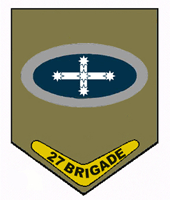
27th (Airmobile Infantry) Brigade
The Eureka Brigade is an airmobile infantry formation based at ADB Tindal near Katherine, Australian Northern Territory. The brigade is of elite quality and is equipped with Tanakan VTOL aircraft and modern infantry equipment.
2nd Battery,
Regiment of Australian Artillery
1st Battalion, Wundurra Regiment
9th Battalion, Wundurra Regiment
21st Battalion, Australian Rifles
144th Battalion, Sikh Regiment of Australia
Brigade Engineer Unit 27, Corps of Engineers
Brigade Operations Unit 27, Corps of Operations
Brigade Aviation Unit 27, Corps of Aviation
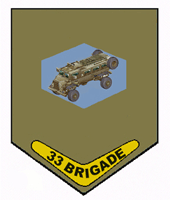
33rd (Infantry) Brigade
The Motor Brigade is a mechanised
infantry formation based at ADB Curtin near
7th Battery,
Regiment of Australian Artillery
6th Battalion, Victoria Regiment
7th Battalion, Victoria Regiment
38th Battalion, Victoria Regiment
83rd Battalion, Rivers Regiment
Brigade Engineer Unit 33, Corps of Engineers
Brigade Operations Unit 33, Corps of Operations
Brigade Aviation Unit 33, Corps of Aviation
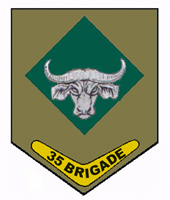
35th (Armoured) Brigade
The Buffalo Brigade is an armoured
hovercraft formation based at ADB
37th Battery,
Regiment of Australian Artillery
14th Squadron, Tank Regiment of Australia
22nd Squadron, Tank Regiment of Australia
3rd Squadron, South Australian Mounted Rifles
4th Squadron, Prime Minister's Light Horse
Brigade Engineer Unit 35, Corps of Engineers
Brigade Operations Unit 35, Corps of Operations
Brigade Aviation Unit 35, Corps of Aviation
The Jungle Division is the
full time covering force for the state of
6th (Operational)
Battery, Regiment of Australian Artillery
80th (Air Defence) Battery, Regiment of Australian Artillery
102nd (Operational) Battery, Regiment of Australian Artillery
20th (Reconnaissance) Squadron, Cavalry Regiment of Australia
5th (Assault) Battalion, Commando Regiment of Australia
Division Engineer Unit 111, Corps of Engineers
Division Operations Unit 111, Corps of Operations
Division Aviation Unit 111, Corps of Aviation
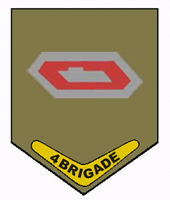
4th (Tracked Armoured) Brigade
The Sentinel Brigade is a full-time
brigade providing a heavy tracked armour striking force for 3rd Corps.
The brigade is based in ADB
12th Battery,
Regiment of Australian Artillery
13th Battery, Regiment of Australian Artillery
1st (Tracked) Squadron, Tank Regiment of Australia
5th (Tracked) Squadron, Tank Regiment of Australia
15th (Tracked) Squadron, New South Wales Lancers
32nd (Tracked) Squadron, Armour Regiment of
New Canberra
Brigade Engineer Unit 4, Corps of Engineers
Brigade Operations Unit 4, Corps of Operations
Brigade Aviation Unit 4, Corps of Aviation
KSU, Special Air Service Regiment
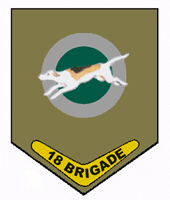
18th (Armoured) Brigade
The Hound Brigade is an armoured
hovercraft formation based in ADB
107th Battery,
Regiment of Australian Artillery
10th Squadron, Cavalry Regiment of Australia
12th Squadron, Tank Regiment of Australia
29th Squadron, New Canberra Guides
46th Squadron, New Canberra Guides
Brigade Engineer Unit 18, Corps of Engineers
Brigade Operations Unit 18, Corps of Operations
Brigade Aviation Unit 18, Corps of Aviation
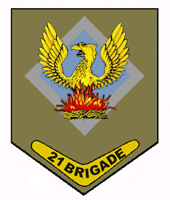
21st (Airmobile Infantry) Brigade
The Phoenix Brigade is an airmobile
infantry formation based at ADB Lavarack
in
A (1st)
Battery, Regiment of Australian Artillery
1st Battalion, Regular Australian Regiment
2nd Battalion, Commando Regiment of Australia
2nd Battalion, Wundurra
Regiment
2nd Battalion, New Canberra Regiment
Brigade Engineer Unit 21, Corps of Engineers
Brigade Operations Unit 21, Corps of Operations
Brigade Aviation Unit 21, Corps of Aviation
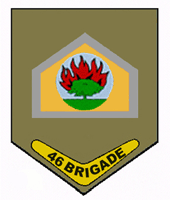
46th (Infantry) Brigade
The Bushfire Brigade is a mechanised
infantry formation based at ADB
11th Battery,
Regiment of Australian Artillery
34th Battalion, New South Wales Regiment
9th Battalion, Queensland Regiment
26th Battalion, Queensland Regiment
Brigade Engineer Unit 46, Corps of Engineers
Brigade Operations Unit 46, Corps of Operations
Brigade Aviation Unit 46, Corps of Aviation
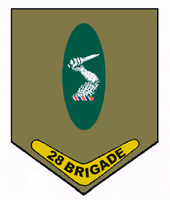
28th (Airmobile Infantry) Brigade
The Dagger Brigade is an airmobile
infantry formation based at ADB
Creswell in the
134th Battery,
Regiment of Australian Artillery
5th Battalion, Regular Australian Regiment
27th Battalion, South Australia Regiment
11th Battalion, Western Australia Regiment
74th Battalion, Eastern Shore Regiment
Brigade Engineer Unit 28, Corps of Engineers
Brigade Operations Unit 28, Corps of Operations
Brigade Aviation Unit 28, Corps of Aviation
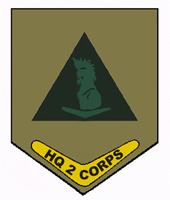
2nd Corps is the part-time regular
FD COM force for the Earth Theatre with all its units on 48-hours notice
for operations. The formation is a fully equipped mechanised combat
force tasked with the defence of continental
Corps troops comprise a number of independent specialist units and five supporting groups. These units and formations come directly under the command of HQ 2nd Corps but are sometimes assigned to other commands as needed. The independent units consist of engineering and electronic warfare assets.
Corps Engineering
(Amphibious) Unit 137, Corps of Engineers
Corps Engineering (Bridging) Unit 138, Corps of Engineers
Corps Engineering (Construction) Unit 139, Corps of Engineers
Corps Engineering (Terminal) Unit 140, Corps of Engineers
Corps Engineering (NBCE Defence) Unit 141, Corps of Engineers
Corps Operations (Electronic Warfare) Unit 134, Corps
of Operations
Tactical Artillery Group 3 (Reserve)
TAG-3 is one of the reserve tactical
artillery formations of 2nd Corps and is based in ADB
161st (Corps
Tactical)
164th (Corps Tactical)
165th (Corps Tactical)
167th (Corps Tactical)
Tactical Artillery Group 4 (Reserve)
TAG-3 is one of the reserve tactical
artillery formations of 2nd Corps and is based in ADB Hunter,
58th (Corps
Tactical)
93rd (Corps Tactical)
98th (Corps Tactical)
142nd (Corps Tactical)
Operational Artillery Group 5 (Reserve)
OAG-5 is the reserve operational artillery
formation of 2nd Corps and is headquartered at ADB
83rd (Corps
Operational)
95th (Corps Operational)
153rd (Corps Operational)
155th (Corps Operational)
Strike Aviation Group 5 (Reserve)
The strike aviation group of 2nd Corps,
SAG-5 is a reserve formation with most of its personnel serving on a
part-time basis. The group is headquartered at ADB
Strike
Aviation Unit 153 (Reserve), Corps of Aviation
Strike Aviation Unit 154 (Reserve), Corps of
Aviation
Strike Aviation Unit 155 (Reserve), Corps of
Aviation
Strike Aviation Unit 156 (Reserve), Corps of
Aviation
Lift Aviation Group 6 (Reserve)
This group is the transport aviation
formation of 2nd Corps and is based in ADB Cerberus in
Lift Aviation
Unit 157 (Reserve), Corps of Aviation
Lift Aviation Unit 158 (Reserve), Corps of Aviation
Lift Aviation Unit 159 (Reserve), Corps of Aviation
Lift Aviation Unit 160 (Reserve), Corps of Aviation
The Poziéres
Division comprises reserve defenders serving in a part-time capacity
from across the eastern seaboard of
108th (Operational)
Battery (Reserve), Regiment of Australian Artillery
116th (Air Defence) Battery (Reserve), Regiment
of Australian Artillery
132nd (Operational) Battery (Reserve), Regiment of Australian Artillery
5th (Reconnaissance) Squadron (Reserve), Queensland
Mounted Infantry
36th (Assault) Battalion (Reserve), Australian
Rifles
Division Engineer Unit 102 (Reserve), Corps
of Engineers
Division Operations Unit 102 (Reserve), Corps
of Operations
Division Aviation Unit 102 (Reserve), Corps
of Aviation
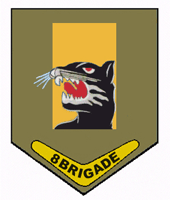
8th (Infantry) Brigade (Reserve)
The Panther Brigade is a mechanised
infantry formation based in
Field Battery
(Reserve), Sydney University Scouts
3rd Battalion (Reserve), New South Wales Regiment
18th Battalion (Reserve), New South Wales Regiment
35th Battalion (Reserve), New South Wales Regiment
56th Battalion (Reserve) , New South Wales Regiment
Brigade Engineer Unit 8 (Reserve), Corps of
Engineers
Brigade Operations Unit 8 (Reserve), Corps of
Operations
Brigade Aviation Unit 8 (Reserve), Corps of
Aviation
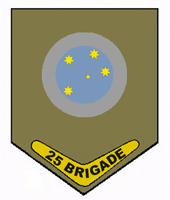
25th (Tracked Armoured) Brigade
(Reserve)
The Southern Cross Brigade
is a tracked armoured formation headquartered in
79th Battery
(Reserve), Regiment of Australian Artillery
12th (Tracked) Squadron (Reserve), New South
Wales Lancers
16th (Tracked) Squadron (Reserve), New South
Wales Lancers
2nd (Tracked) Squadron (Reserve), Queensland
Mounted Infantry
14th (Tracked) Squadron (Reserve), Queensland
Mounted Infantry
Brigade Engineer Unit 25 (Reserve), Corps of
Engineers
Brigade Operations Unit 25 (Reserve), Corps
of Operations
Brigade Aviation Unit 25 (Reserve), Corps of
Aviation
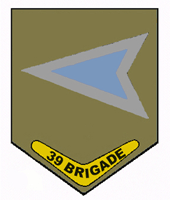
39th (Infantry) Brigade (Reserve)
The Blue Arrow Brigade is an
infantry formation headquartered in
56th Battery
(Reserve), Regiment of Australian Artillery
41st Battalion (Reserve), New South Wales Regiment
45th Battalion (Reserve), New South Wales Regiment
42nd Battalion (Reserve), Queensland Regiment
61st Battalion (Reserve), Queensland Regiment
Brigade Engineer Unit 39 (Reserve), Corps of
Engineers
Brigade Operations Unit 39 (Reserve), Corps
of Operations
Brigade Aviation Unit 39 (Reserve), Corps of
Aviation
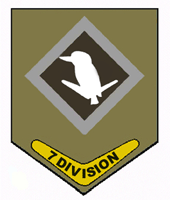
The Kokoda
Division is recruited primarily from the southern state of
5th (Operational)
Battery (Reserve), Regiment of Australian Artillery
23rd (Operational) Battery (Reserve), Regiment
of Australian Artillery
67th (Air Defence) Battery (Reserve), Regiment
of Australian Artillery
18th (Reconnaissance) Squadron (Reserve), South
Australian Mounted Rifles
46th (Assault) Battalion (Reserve), Australian
Rifles
Division Engineer Unit 107 (Reserve), Corps
of Engineers
Division Operations Unit 107 (Reserve), Corps
of Operations
Division Aviation Unit 107 (Reserve), Corps
of Aviation
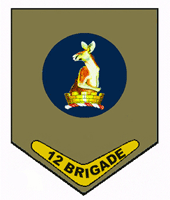
12th (Infantry) Brigade (Reserve)
The Melbourne Brigade is a
mechanised infantry formation based in
113th Battery
(Reserve), Regiment of Australian Artillery
23rd Battalion (Reserve), Victoria Regiment
24th Battalion (Reserve), Victoria Regiment
32nd Battalion (Reserve), Victoria Regiment
37th Battalion (Reserve), Victoria Regiment
Brigade Engineer Unit 12 (Reserve), Corps of
Engineers
Brigade Operations Unit 12(Reserve), Corps of
Operations
Brigade Aviation Unit 12 (Reserve), Corps of
Aviation
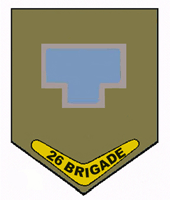
26th (Infantry) Brigade (Reserve)
The Alpine Brigade is a mechanised
infantry formation based in the
east of
140th Battery
(Reserve), Regiment of Australian Artillery
57th Battalion (Reserve), Victoria Regiment
58th Battalion (Reserve), Victoria Regiment
60th Battalion (Reserve), Victoria Regiment
64th Battalion (Reserve), Victoria Regiment
Brigade Engineer Unit 26 (Reserve), Corps of
Engineers
Brigade Operations Unit 26 (Reserve), Corps
of Operations
Brigade Aviation Unit 26 (Reserve), Corps of
Aviation
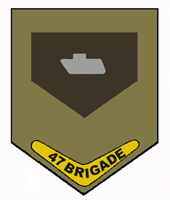
47th (Tracked Armoured) Brigade
(Reserve)
The Night-Tank Brigade is a tracked armoured formation based at. The brigade is of regular quality and is equipped with Crocodile I/II main battle tanks, Wombat armoured personnel carriers and second-line infantry equipment.
Field Battery
(Reserve), Melbourne University Rifles
17th (Tracked) Squadron (Reserve), Prime Minister's
Light Horse
27th (Tracked) Squadron (Reserve), Prime Minister's
Light Horse
20th (Tracked) Squadron (Reserve), Victorian
Mounted Rifles
22nd (Tracked) Squadron (Reserve), Victorian
Mounted Rifles
Brigade Engineer Unit 47 (Reserve), Corps of
Engineers
Brigade Operations Unit 47 (Reserve), Corps
of Operations
Brigade Aviation Unit 47 (Reserve), Corps of
Aviation
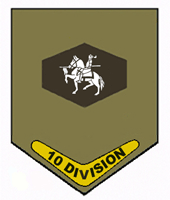
The Darwin Division is recruited primarily
from the reclaimed outback of central
31st (Air
Defence) Battery (Reserve), Regiment of Australian Artillery
55th (Operational) Battery (Reserve), Regiment of Australian Artillery
135th (Operational) Battery (Reserve), Regiment of Australian Artillery
29th (Reconnaissance) Squadron (Reserve), Australian Mounted Bushmen
36th (Assault) Squadron (Reserve), Australian
Mounted Bushmen
Division Engineer Unit 110 (Reserve), Corps
of Engineers
Division Operations Unit 110 (Reserve), Corps
of Operations
Division Aviation Unit 110 (Reserve), Corps
of Aviation
41st (Armoured) Brigade (Reserve)
The Outback Brigade is an armoured
hovercraft formation based along the upper
59th Battery
(Reserve), Regiment of Australian Artillery
7th Squadron (Reserve), New South Wales Mounted
Rifles
21st Squadron (Reserve), New South Wales Mounted
Rifles
26th Squadron (Reserve), Australian Mounted Bushmen
37th Squadron (Reserve), Australian Mounted
Bushmen
Brigade Engineer Unit 41 (Reserve), Corps of
Engineers
Brigade Operations Unit 41 (Reserve), Corps
of Operations
Brigade Aviation Unit 41 (Reserve), Corps of
Aviation
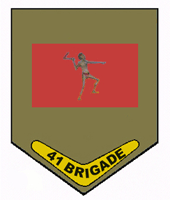
51st (Infantry) Brigade (Reserve)
The Murray
Brigade is a mechanised infantry formation headquartered in the
major trading city of
119th Battery
(Reserve), Regiment of Australian Artillery
33rd Battalion (Reserve), New South Wales Regiment
62nd Battalion (Reserve), New South Wales Regiment
29th Battalion (Reserve), Victoria Regiment
59th Battalion (Reserve), Victoria Regiment
Brigade Engineer Unit 51 (Reserve), Corps of Engineers
Brigade Operations Unit 51 (Reserve), Corps of Operations
Brigade Aviation Unit 51 (Reserve), Corps of Aviation
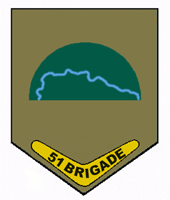
56th
(Infantry) Brigade (Reserve)
The
Simpson Brigade is a mechanised infantry
formation based in Simpson Plains and
149th
28th (Infantry) Squadron (Reserve), Australian Mounted
Bushmen
31st (Infantry) Squadron (Reserve), Australian Mounted
Bushmen
32nd (Infantry) Squadron (Reserve), Australian Mounted
Bushmen
38th (Infantry) Squadron (Reserve), Australian Mounted
Bushmen
Brigade Engineer Unit 56 (Reserve), Corps of Engineers
Brigade Operations Unit 56 (Reserve), Corps of Operations
Brigade Aviation Unit 56 (Reserve), Corps of Aviation
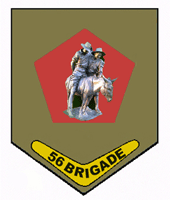
63rd (Armoured) Brigade (Reserve)
The
Grey Brigade is an armoured hovercraft
formation based in the Great Artesian Basin of Queensland with some
units in northern
27th Battery
(Reserve), Regiment of Australian Artillery
24th Squadron (Reserve), New South Wales Mounted Rifles
30th Squadron (Reserve), Australian Mounted
Bushmen
34th Squadron (Reserve), Australian Mounted Bushmen
33rd Squadron (Reserve), Australian Mounted Bushmen
Brigade Engineer Unit 63 (Reserve), Corps of Engineers
Brigade Operations Unit 63 (Reserve), Corps of Operations
Brigade Aviation Unit 63 (Reserve), Corps of Aviation
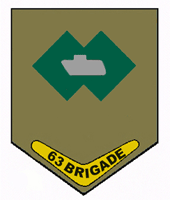
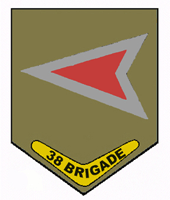
38th (Armoured) Brigade (Reserve)
The Red Arrow Brigade is an
armoured hovercraft formation headquartered in
66th Battery
(Reserve), Regiment of Australian Artillery
9th Squadron (Reserve), South Australian Mounted
Rifles
23rd Squadron (Reserve), South Australian Mounted
Rifles
10th Squadron (Reserve), Tenth Light Horse
25th Squadron (Reserve), Tenth Light Horse
Brigade Engineer Unit 38 (Reserve), Corps of
Engineers
Brigade Operations Unit 38 (Reserve), Corps
of Operations
Brigade Aviation Unit 38 (Reserve), Corps of
Aviation
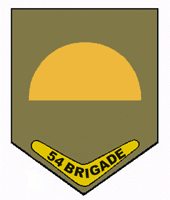
54th (Infantry) Brigade (Reserve)
The Nullarbor
Brigade is a mechanised infantry formation headquartered in
187th Battery
(Reserve), Regiment of Australian Artillery
43rd Battalion (Reserve), South Australia Regiment
48th Battalion (Reserve), South Australia Regiment
16th Battalion (Reserve), Western Australia Regiment
28th Battalion (Reserve), Western Australia Regiment
Brigade Engineer Unit 54 (Reserve), Corps of Engineers
Brigade Operations Unit 54 (Reserve), Corps of Operations
Brigade Aviation Unit 54 (Reserve), Corps of Aviation
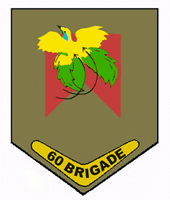
60th (Airmobile Infantry) Brigade
(Reserve)
The Barrier
Brigade is an airmobile infantry formation headquartered in
184th Battery
(Reserve), Regiment of Australian Artillery
15th Battalion (Reserve), Queensland Regiment
25th Battalion (Reserve), Queensland Regiment
47th Battalion (Reserve), Queensland Regiment
49th Battalion (Reserve), Queensland Regiment
Brigade Engineer Unit 60 (Reserve), Corps of Engineers
Brigade Operations Unit 60 (Reserve), Corps of Operations
Brigade Aviation Unit 60 (Reserve), Corps of Aviation
Australian regional forces are primarily part-time units responsible for military security and operations at a regional level across Australian sovereign territory. FD COM regional forces don’t report to a FD COM Corps HQ like the field divisions but to a joint force “Regional Force” which covers a specific territorial area. These regional forces also command all support, training and administration units and formations within that area not directly attached to combat commands. The role of FD COM regional forces is five-fold. Firstly they are to provide local area, behind the lines security against saboteurs or rapid movement assaults such as airborne attacks. Secondly they are to repair damage to lines of communications by enemy deep penetration attacks or natural disaster. Thirdly they offer protection to support forces, supplies and resting troops from enemy attack. Fourthly they provide logistic and administration support to other units operating in their area. Finally they are to stay behind in case their area is overrun to harass an occupying enemy by conducting insurgency warfare. These formations are based in the regions they are expected to defend; though the unlikelihood of that possibility has hampered some recruiting efforts. Each regional force division has part-time regular units for air defence and lines of communications functions, fortress units and several militia territorial defence groups. These defence groups are light brigades of about 2,800 personnel with eight 240 strong territorial defence units (of four light companies) plus engineering and lines of communications troops. Regional areas lacking sufficient local population to raise defence groups have part-time regular garrison defence groups allotted to provide local security.
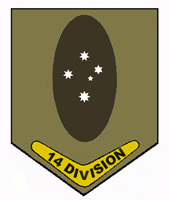
14th (Regional Force) Division
(Reserve)
The South East Division is
FD COM’s reserve regional force for south-eastern continental
Air
Defence Artillery Group 9 (Reserve)
112th (Air
Defence)
133rd (Air Defence)
183rd (Air Defence)
185th (Air Defence)
Territorial
Defence Group 3 (Militia)
Territorial
Defence Unit 1 (Militia), City of Sydney Regiment
Territorial Defence Unit 4 (Militia), Australian Rifles
Territorial Defence Unit 17 (Militia), North Sydney Regiment
Territorial Defence Unit 18 (Militia), Ku-Ring-Gai Regiment
Territorial Defence Unit 19 (Militia), South Sydney Regiment
Territorial Defence Unit 30 (Militia), New South Wales
Scottish Rifles
Territorial Defence Unit 36 (Militia), St. George’s Rifles
Territorial Defence Unit 51 (Militia), Field of Mars
Regiment
Territorial
Defence Group 4 (Militia)
Territorial
Defence Unit 3 (Militia), Werriwa Regiment
Territorial Defence Unit 20 (Militia), Parramatta and
Blue Mountains Regiment
Territorial Defence Unit 45 (Militia), St. George Regiment
Territorial Defence Unit 53 (Militia), West Sydney Regiment
Territorial Defence Unit 55 (Militia), New South Wales
Irish Rifles
Territorial Defence Unit 65 (Militia), Kangara
Regiment
Territorial Defence Unit 69 (Militia), Australian Chinese
Rifles
Territorial Defence Unit 71 (Militia),
Territorial
Defence Group 5 (Militia)
Territorial
Defence Unit 5 (Militia), Victorian Scottish Regiment
Territorial Defence Unit 6 (Militia), City of
Territorial Defence Unit 14 (Militia), Prahran Regiment
Territorial Defence Unit 24 (Militia), Kooyong Regiment
Territorial Defence Unit 29 (Militia),
Territorial Defence Unit 39 (Militia), Hawthorn-Kew Regiment
Territorial Defence Unit 46 (Militia),
Territorial Defence Unit 52 (Militia), Gippsland Regiment
Territorial
Defence Group 6 (Militia)
Territorial
Defence Unit 8 (Militia), City of
Territorial Defence Unit 21 (Militia),
Victorian Rangers
Territorial Defence Unit 23 (Militia), City of
Territorial Defence Unit 32 (Militia), Footscray Regiment
Territorial Defence Unit 57 (Militia), Merra
Regiment
Territorial Defence Unit 58 (Militia), Essendon Rifles
Territorial Defence Unit 59 (Militia), Hume Regiment
Territorial Defence Unit 60 (Militia),
Territorial
Defence Group7 (Militia)
Territorial
Defence Unit 2 (Militia), City of Newcastle Regiment
Territorial Defence Unit 13 (Militia), Macquarie Regiment
Territorial Defence Unit 35 (Militia), Newcastle’s Own
Regiment
Territorial Defence Unit 86 (Militia), Hunter River Lancers
Territorial Defence Unit 33 (Militia), New England Regiment
Territorial Defence Unit 41 (Militia), Byron Scottish
Territorial Defence Unit 82 (Militia),
Territorial Defence Unit 85 (Militia), Northern Rivers
Lancers
Territorial
Defence Group 8 (Militia)
Territorial
Defence Unit 34 (Militia), Illawarra Regiment
Territorial Defence Unit 54 (Militia), Lachlan-Macquarie
Regiment
Territorial Defence Unit 56 (Militia), Riverina Regiment
Territorial Defence Unit 62 (Militia), Marauke
Regiment
Territorial Defence Unit 76 (Militia),
Territorial Defence Unit 77 (Militia), Australian Horse
Territorial Defence Unit 91 (Militia), Riverina Horse
Territorial Defence Unit 94 (Militia), Gwydir Regiment
Territorial
Defence Group 12 (Militia)
Territorial
Defence Unit 12 (Militia), City of Canberra Regiment
Territorial Defence Unit 22 (Militia), South Gippsland
Regiment
Territorial Defence Unit 37 (Militia), East Gippsland
Regiment
Territorial Defence Unit 40 (Militia), Capital Regiment
Territorial Defence Unit 50 (Militia), Newcentre
Regiment
Territorial Defence Unit 83 (Militia), Gippsland Light
Horse
Territorial Defence Unit 99 (Militia), High Country Regiment
Territorial Defence Unit 101 (Militia), South Coast Regiment
Territorial
Defence Group 14 (Militia)
Territorial
Defence Unit 7 (Militia), North West Murray Borderers
Territorial Defence Unit 38 (Militia), Bendigo Regiment
Territorial Defence Unit 74 (Militia), Corangamite Light
Horse
Territorial Defence Unit 78 (Militia), Indi
Light Horse
Territorial Defence Unit 84 (Militia), Selwyn Light Horse
Territorial Defence Unit 87 (Militia), North West Victorian
Regiment
Territorial Defence Unit 89 (Militia), Yarowee
Light Horse
Territorial Defence Unit 90 (Militia), Goulburn Mounted
Rifles
15th (Regional Force) Division
(Reserve)
The South West Division is
the reserve regional force for south-western continental
Regional Force Surveillance Unit 100 (Militia), Woomera Regiment
Air
Defence Artillery Group 10 (Reserve)
151st (Air
Defence)
154th (Air Defence)
186th (Air Defence)
188th (Air Defence)
Territorial
Defence Group 10 (Militia)
Territorial
Defence Unit 10 Militia),
Territorial Defence Unit 73 (Militia),
Territorial Defence Unit 88 (Militia),
Territorial Defence Unit 96 (Militia), Glenelg Regiment
Territorial
Defence Group 11 (Militia)
Territorial
Defence Unit 11 (Militia), City of Perth Regiment
Territorial Defence Unit 16 (Militia), Cameron Highlanders
of Western Australia
Territorial Defence Unit 28 (Militia), Swan Regiment
Territorial Defence Unit 44 (Militia), West Australian
Rifles
Territorial Defence Unit 80 (Militia), Western Australian
Mounted Infantry
Territorial Defence Unit 95 (Militia), Fremantle Volunteers
Territorial Defence Unit 98 (Militia), Goldfields Regiment
Territorial Defence Unit 102 (Militia), Murchison and
Gascoyne Regiment
Territorial
Defence Group 15 (Militia)
Territorial
Defence Unit 27 (Militia), South Australian Scottish Regiment
Territorial Defence Unit 43 (Militia), Hindmarsh Regiment
Territorial Defence Unit 48 (Militia), Torrens Regiment
Territorial Defence Unit 79 (Militia), Flinders Light
Horse
Territorial Defence Unit 93 (Militia), Barossa Light
Horse
Territorial Defence Unit 97 (Militia), South Australian
Bushmen
Territorial Defence Unit 103 (Militia), Lake Eyre Light
Horse
Territorial Defence Unit 105 (Militia), Simpson Rifles
16th (Regional Force) Division
(Reserve)
The Queensland Division is
the regional force for north-eastern continental
Regional Force Surveillance Unit 31 (Militia),
Kennedy Regiment
Regional Force Surveillance
Unit 67 (Militia), Carpentaria Rangers
Air
Defence Artillery Group 8 (Reserve)
166th (Air
Defence)
177th (Air Defence)
181st (Air Defence)
182nd (Air Defence)
Territorial
Defence Group 9 (Militia)
Territorial
Defence Unit 9 (Militia), Moreton Regiment
Territorial Defence Unit 15 (Militia), Oxley Regiment
Territorial Defence Unit 26 (Militia), Logan and Albert
Regiment
Territorial Defence Unit 49 (Militia), Stanley Regiment
Territorial Defence Unit 61 (Militia), Queensland Cameron
Highlanders
Territorial Defence Unit 66 (Militia), City of the Gold
Coast Regiment
Territorial Defence Unit 42 (Militia), Capricornia Regiment
Territorial Defence Unit 47 (Militia), Wide Bay Regiment
Territorial
Defence Group 16 (Militia)
Territorial
Defence Unit 25 (Militia), Great Dividing Ranges Regiment
Territorial Defence Unit 72 (Militia), Channel Light
Horse
Territorial Defence Unit 75 (Militia), Artesian Light
Horse
Territorial Defence Unit 81 (Militia), Darling
17th (Regional Force) Division
(Reserve)
The Northern Division is the
regional force for north-western continental
Regional Force Surveillance Unit 63 (Militia),
Norforce Regiment
Regional Force Surveillance
Unit 64 (Militia), Pilbara Regiment
Regional Force Surveillance
Unit 68 (Militia), Kanandah Regiment
Regional Force Surveillance
Unit 104 (Militia), Kimberly Regiment
Air
Defence Artillery Group 14 (Reserve)
162nd (Air
Defence)
163rd (Air Defence)
171st (Air Defence)
172nd
(Air Defence)
Garrison
Defence Group 1 (Reserve)
GDG-1 is an infantry brigade sized
formation based at in
17th (Garrison)
Battalion (Reserve), New South Wales Regiment
19th (Garrison) Battalion (Reserve), New South
Wales Regiment
54th (Garrison) Battalion (Reserve), New South
Wales Regiment
63rd (Garrison) Battalion (Reserve), New South
Wales Regiment
Garrison
Defence Group 2 (Reserve)
GDG-2 is an infantry brigade sized
formation based in
14th (Garrison)
Battalion (Reserve), Victoria Regiment
39th (Garrison) Battalion (Reserve), Victoria
Regiment
22nd (Garrison) Battalion (Reserve), Victoria
Regiment
52nd (Garrison) Battalion (Reserve), Victoria
Regiment
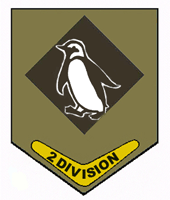
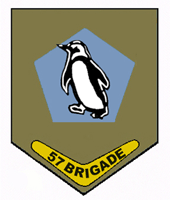
The Penguin Brigade is the
regular FD COM regional force for the
34th (Tactical)
Battery, Regiment of Australian Artillery
49th (Air Defence) Battery, Regiment of Australian Artillery
94th (Operational) Battery, Regiment of Australian
Artillery
7th Squadron, Cavalry Regiment of Australia
19th Squadron, Cavalry Regiment of Australia
3rd Battalion, Commando Regiment of Australia
8th Battalion, Victoria Regiment
Brigade Engineer Unit 57, Corps of Engineers
Brigade Operations Unit 57, Corps of Operations
Brigade Aviation Unit 57, Corps of Aviation
ASU, Special Air Service Regiment
Territorial Defence Unit 70 (Militia), Antarctic Regiment
Territorial Defence Unit 106 (Militia), Antarctic Regiment
Territorial
Defence Group 13 (Militia)
The TDG-13 is the local defence force
for the
Territorial Defence Unit 131-138 (Militia), Australian Aristarchus Corps
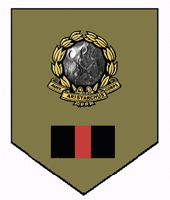
8th Battalion, Wundurra
Regiment
Earth Theatre maintains one rifle battalion attached to Space Force Command. The battalion’s main role is to provide extra military security to the Australian space-city at Aristarchus Crater on Luna. These troops also provide the bulk of any landing force attached to individual space ships operating out the Sol system.
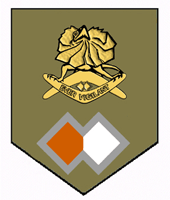
1st Battalion, Commando Regiment
of
This battalion is the public duties
unit for Newcentre, the Australian capital
on Earth. The battalion provides troops for ceremonial and security
details at significant locations around the capital. Some politicians
find their presence an uncomfortable reminder of when