
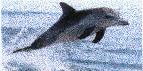
When Pete Coram and colleagues were returning from a dive on Sat. 18th March the crew noticed ahead, as they were passing St Loy Bay SW2423, a disturbance in the sea with dolphins jumping and birds excitedly screaming overhead, altering course slightly to get a closer view they soon realised the situation. The dolphins had herded a shoal of fish, thought to be small mackerel, into a tight circle an
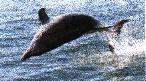 d the sea seemed to he boiling as the fish
were jumping, the dolphins were taking turns to swoop in for a feast. Pete did
not recognise the species but as the maximum size was about 6fi and some were
as small as 2fi they were probably Common Dolphins. The crew enjoyed the
spectacle for about 20 minutes.
d the sea seemed to he boiling as the fish
were jumping, the dolphins were taking turns to swoop in for a feast. Pete did
not recognise the species but as the maximum size was about 6fi and some were
as small as 2fi they were probably Common Dolphins. The crew enjoyed the
spectacle for about 20 minutes. Earlier in the month another feeding frenzy was observed off Tintagel, on Monday 3rd a closer examination of a disturbance in the water revealed several large fish about 3 to 4 ft long feeding on a shoal of smaller fish at the surface which had been tightly encircled. The species was not recognized by the observer but it could possibly have been Spur Dog, Squalus acanthias a small shark which normally lives and feeds near t
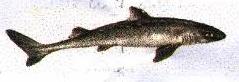 he bottom of the
sea down to as much as 500 fathoms but occasionally come to the surface to feed
on schooling fish such as herring, sprat, pilchard and sand eels. They get
their name from the spine or spur in front of each of it's two dorsal fins.
Some of them were observed to streak away from the scene leaving a white wake
while others stayed to feed.
he bottom of the
sea down to as much as 500 fathoms but occasionally come to the surface to feed
on schooling fish such as herring, sprat, pilchard and sand eels. They get
their name from the spine or spur in front of each of it's two dorsal fins.
Some of them were observed to streak away from the scene leaving a white wake
while others stayed to feed. Risso's Dolphins were seen off Cain Gloose around the Brisons Rocks and off the Minack Cliff Theatre on the 4th of March. Porpoises were seen along the south Penwith coast every day except one from 12th to 18th of the month and again on the 29th. one more Basking Shark has been seen this time off Mousehole and the Bottlenose Dolphins have been seen in the Helford River and Coverack Bay areas . Benty' 5 pod of 5 seems to have gained a new member, and number 6 has a white patch near to the tip of its dorsal. The most often seen dolphin has been the Common Dolphin and in quite large numbers ,pod sizes have ranged from 20 to 80. As well as many seal carcasses turning on the beaches there have been 69 dolphin carcasses of various species, mainly Commons, washed up on the beaches of Cornwall, Devon and Dorset.
