Conservation
|
Conservation
|
|

|
| August "99 Looking at the picture below you may wonder what deserts and sand dunes have to do with Marine Conservation, the fact is, desert is being blamed not only for the destruction of coral reefs but also the dramatic rise in asthma cases.. Scientists believe that prolonged drought in Africa's Sahel region - the impoverished area on the southern edge of the Sahara - is responsible for a global spread of illness and decay. The drought has led to a five-fold increase in bacteria-laden dust in the atmosphere since the mid - 1970s with one billion tones a year dumped on the Caribbean alone and 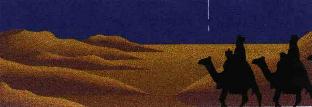 has coincided with a plague which has killed 90% of the
Caribbean Sea fans since 1983. The dust is sucked up into the atmosphere and
carried around the world by winds. This dust contains bacteria, viruses and
fungi that can kill coral. It is also rich in iron, which can fertilize algae
that smother reefs, and carries a soil fungus called aspergillus, which causes
lung infections. The Caribbean coral reefs are being blighted with epidemics
including white band and black band disease and a bacterial infection known as
"coral plague" and the worst outbreak of these and other mystery
diseases have coincided with years when the dust load in the atmosphere was
highest. However North Africa has seen a lot of rain this year which should
damp down the dust and so the coral may get a chance to recover. has coincided with a plague which has killed 90% of the
Caribbean Sea fans since 1983. The dust is sucked up into the atmosphere and
carried around the world by winds. This dust contains bacteria, viruses and
fungi that can kill coral. It is also rich in iron, which can fertilize algae
that smother reefs, and carries a soil fungus called aspergillus, which causes
lung infections. The Caribbean coral reefs are being blighted with epidemics
including white band and black band disease and a bacterial infection known as
"coral plague" and the worst outbreak of these and other mystery
diseases have coincided with years when the dust load in the atmosphere was
highest. However North Africa has seen a lot of rain this year which should
damp down the dust and so the coral may get a chance to recover. Towards the end of July an algal bloom off the south coasts of Devon and Cornwall coloured the sea white, the minute algae called Emiliania huxleyi sheds its chalky outer casing turning the sea a milky white. These plankton blooms have been seen before but have usually been much further off the coast and are reported to be perfectly harmless. The phenomenon was thought to be caused by the continuing hot weather and warm seas and has been dubbed The Maritime Milky Way. Scientists have also been taking samples of water in the Fal Estuary where a potentially toxic reddish brown algae, known as a red tide has been spotted, this algae has affected the estuary in previous years and can be poisonous to animals and people. Red Tides are a naturally occurring phenomenon associated with hot weather. An experiment in Scotland has been successful 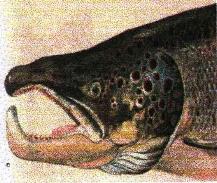 in producing genetically modified Atlantic Salmon.
10,000 Atlantic Salmon eggs were injected with a growth hormone from another
species, the American Chinook Salmon, to advance the rate of maturity and 50
fish grew at 4 times the normal growth rate. After one year they were 200 grams
whereas normally they would have been 50 grams. The fish were grown in a land
based containment and the project was terminated after one year All the fish
were destroyed. The company decided not to proceed because of environmental
risks and consumer concerns. in producing genetically modified Atlantic Salmon.
10,000 Atlantic Salmon eggs were injected with a growth hormone from another
species, the American Chinook Salmon, to advance the rate of maturity and 50
fish grew at 4 times the normal growth rate. After one year they were 200 grams
whereas normally they would have been 50 grams. The fish were grown in a land
based containment and the project was terminated after one year All the fish
were destroyed. The company decided not to proceed because of environmental
risks and consumer concerns. I received no reports of Dolphin sightings during July, but Basking Sharks have been seen all around the Cornish coast., with over 60 people reporting sightings, some in very large numbers. 114 were reported off Porthgwarra on the 30th and they must have moved westwards for a similar number was seen between The Scillies and the mainland the following day, several other reports were of 20 to 30 sharks. A Leatherback Turtle was seen off the Longships on the 1st July as was a 50ft Whale with a juvenile. 4 Killer Whales and one Minke Whale was seen. there were four sightings of Risso's Dolphins and 3 of Porpoises, and a few carcasses have beached. Sunfish have been seen in 6 different places. A Red Band Fish was caught on Rod & line on the 6th and a Red Sea Bream was netted on the 7th. Grey seals have been reported from many places and one turned up off Crackington wearing a yellow hat (Welsh). One of the carcasses was of a White Beaked Dolphin of which there have been only half a dozen records for Cornwall. Conservation Officer Raymond Dennis  |