
 longer be a congenial environment for these species. We may no
longer be able to go to our favorite chippy and order Cod and chips, or Haddock
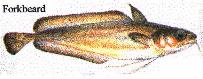
and chips or even Hake and chips, and are likely to be offered Forkbeard and
chips instead.
longer be a congenial environment for these species. We may no
longer be able to go to our favorite chippy and order Cod and chips, or Haddock
and chips or even Hake and chips, and are likely to be offered Forkbeard and
chips instead. It may be a good idea for the fishing industry to stop fishing for the Cod etc. now to allow the stocks to recover, in fact ban all fishing over the continental shelf for several years and instead go beyond the continental shelf to the west and north of Ireland where studies suggest there may be substantial stocks of previously ignored deep-water species. Unrestricted by EU quotas, these could spark a revival in Britains hard pressed fishing industry and a revolution in our eating habits, our supermarket cabinets could soon be full of unfamiliar Mid-Atlantic fish such as Mora Mora, Alfonsino and Molva or
 even more exotic delicacies such as Orange
Roughy and Siki Shark, however these may be too scarce to be worth pursuing but
three species which may support commercial fishing are Redfish, Bluemouth and
Grenadier.
even more exotic delicacies such as Orange
Roughy and Siki Shark, however these may be too scarce to be worth pursuing but
three species which may support commercial fishing are Redfish, Bluemouth and
Grenadier.Adult Basking Sharks are usually easy to identity for they often have
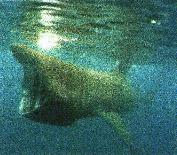 distinctive scars , especially on their
dorsal fins, which is the part we are most likely to see and to be able to
photograph, and now a scheme launched recently by the National Marine Aquarium
in Plymouth, The Shark Trust Project are appealing for people to photograph the
sharks and send in information about the sightings. The Trust is hoping the
sightings will help them keep track of individuals so that we can learn more
about these harmless and mysterious creatures, the second largest fish in the
world, after the Whale Shark. So here's a chance for all you budding
photographers to get some close up shots of Basking Shark dorsal Fins.
distinctive scars , especially on their
dorsal fins, which is the part we are most likely to see and to be able to
photograph, and now a scheme launched recently by the National Marine Aquarium
in Plymouth, The Shark Trust Project are appealing for people to photograph the
sharks and send in information about the sightings. The Trust is hoping the
sightings will help them keep track of individuals so that we can learn more
about these harmless and mysterious creatures, the second largest fish in the
world, after the Whale Shark. So here's a chance for all you budding
photographers to get some close up shots of Basking Shark dorsal Fins. Your chances should be good for shark spotting for I have had 88 reported sightings in the first half of the year totaling about 250 sharks seen, these were mainly in ones and twos but a group of up to 30 were seen off the Lizard on the 3rd and 4th of June. The Bottlenose Dolphins are still around and have been seen all around the coast of Cornwall and Devon but in smaller pods than they were a few years ago, the pods being mainly up to 5 in number but there was a pod of seven to 10 between Sennen and Zennor during the first week of June. The biggest pod was seen on February 4th off Cot valley and that was a pod of 15.
Leatherback Turtles have been in the news again, a very big one said to be 8ft long, was found entangled in a marker buoy rope a few miles south of the Runnelstone on Sunday 25th June, after a long struggle, during which the fishermen got very wet, the turtle was freed. About 20 pilot fish took refuge under the boat while the rescue took place but returned to the turtle as it swam off. Another smaller one was found dead in a net hauled in about 12 miles south of Plymouth on the 29th June. A third one within 10 days was sighted about a 'A mile off Start Point on July 5th , this one was reported by the Brixham Coastguards to be 2 Metres long. On 3rd of July two pods of 6 Pilot Whales were seen off Porthcurno, it is good to see the Pilot Whales returning for this was a regular yearly occurrence some 20 years ago, we used to feed them mackerel that we were catching but stopped the practice after they nearly turned the boat over by putting several chins on the gunwale.
