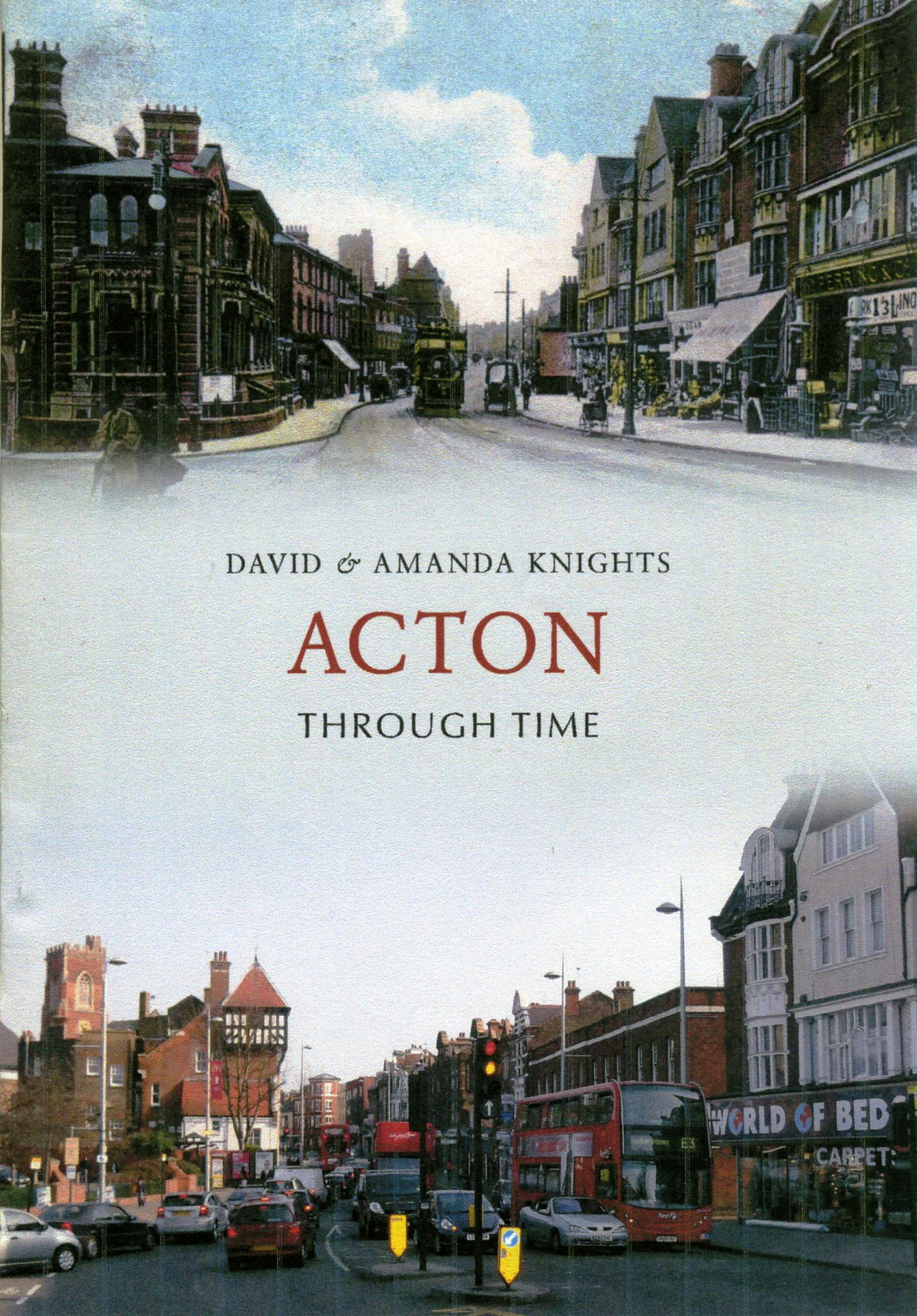
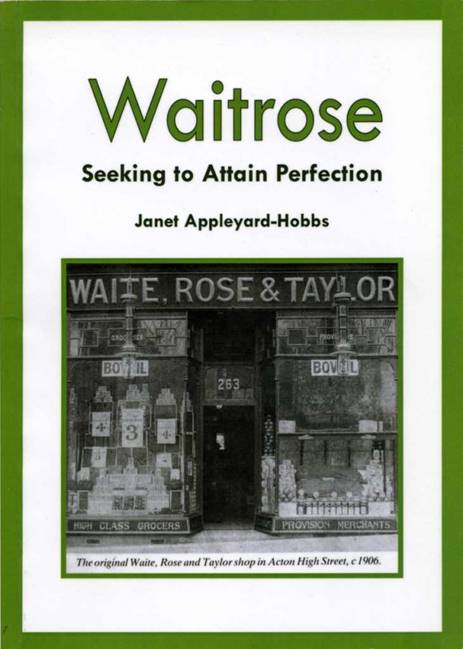
Further ReadingAvailable at Ealing Local History Library:
Still in print:
actonhistory.co.uk publications
Acton History Group publications
|
|
||||||
|
|
Acton Coat of Arms
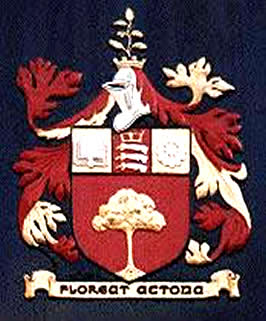 The coat of arms of the former Borough of Acton (granted 1921) as displayed on signs installed in 1998. The arms portray the elements of scholarship, industry, the arms of Middlesex and the oak tree for the supposed origin of the name of Acton - "Oak Town".
The full description of the Acton coat of arms can be seen at Civic Heraldry - Acton. Elements of the Acton coat of arms are incorporated in the arms of the London Borough of Ealing into which Ealing was incorporated in 1965.
Acton's History
Acton is now a suburb of West London about 5 miles from the centre, and well within the built-up area, but for the greater part of it's history, consisted of only a small cluster of houses around the medieval Church of St. Mary's, providing refreshment for travellers on the road from London to Oxford; together with a smaller farming community at East Acton and a number of scattered farm dwellings. The majority of residents were employed in agriculture on the large holdings or in the five common fields farmed in strips. During the 17th and 18th Centuries, Acton found favour as a Spa and as a country retreat for the wealthy from the City, a number of whom had large houses built for their use.
The scene changed little until the 1840s when the village began to expand, but the greatest change began in 1859 when the Enclosure award, permitted the re-allocation of the strips in the common fields into blocks, releasing land for building the lower class housing required to keep up with the rapid growth of London, made possible by the extension of the suburban railways.
Industry came to Acton in the form of many small laundries serving West London. There was no industrial area until this century when factories were set up in Acton Vale and later in North Acton (Park Royal).
A settlement at Acton is mentioned in the Doomsday book of 1086, and the church of St. Mary's is first recorded in the early 13th Century. The original medieval chapel was enlarged by the building of a nave, and much later a tower. The church was the focus of charitable giving - money and property were left in the care of the church for the giving of alms and for the maintenance of a clean water supply. In the 18th century, the building was faced with brick in the style of the time. The present building dates from 1866, when the town outgrew the existing building.
The earliest role of the village of Acton was in providing refreshment for travellers on the busy road from London to Oxford. Although only five miles from London, the state of the roads in early times was such that Acton was at least half a days travel along the road. This led to the opening of many inns and taverns in the vicinity of the church of St. Mary's, so that the travellers and their beasts could take refreshment before continuing the long trek up Acton Hill towards Oxford, or to tidy themselves up before going on to London. The earliest recorded inn is in 1337, and the number of inns and taverns is seen to increase over time reflecting the volume of traffic along the road.
Acton was situated at a point where the clay of the northern uplands interfaces with the gravel sloping down to the Thames and there were numerous brooks and springs providing clean water.
The discovery in the 17th century of mineral bearing springs at Acton Wells, created a spa within easy reach of London, which flourished for some time, but declined as Bath and Tunbridge Wells gained favour.
The relative closeness to London, yet rural nature of Acton, encouraged a number of wealthy people to build country retreats from the City. By the beginning of the 18th century, the roads had improved so that commuting from Acton to the City was possible. However, increased traffic made repairs more necessary. The Turnpike Act of 1714 provided for the maintenance of the roads through the payment of tolls.
The scene changed little until the 1840s when the village began to expand, but the greatest change began in 1859 when the Enclosure Award permitted the re-allocation of the strips in the common fields into blocks, releasing land for building the lower middle class housing required to keep up with the rapid growth of London, made possible by the extension of the suburban railways. The population of Acton grew rapidly as the transport links improved, and it became possible to travel some distance to work.
The Church Vestry administered the parish until 1865 when the growth of the town required the formation of a Local Board, which became an Urban District Council in 1894. Acton was granted County Borough Status in 1921. The crest of the former Borough of Acton (as displayed on information signs) portrays the elements of scholarship, industry, the arms of Middlesex and the oak tree for the supposed origin of the name of Acton - "Oak Town". Acton finally lost its independence in 1965 when it became part of the much larger London Borough of Ealing.
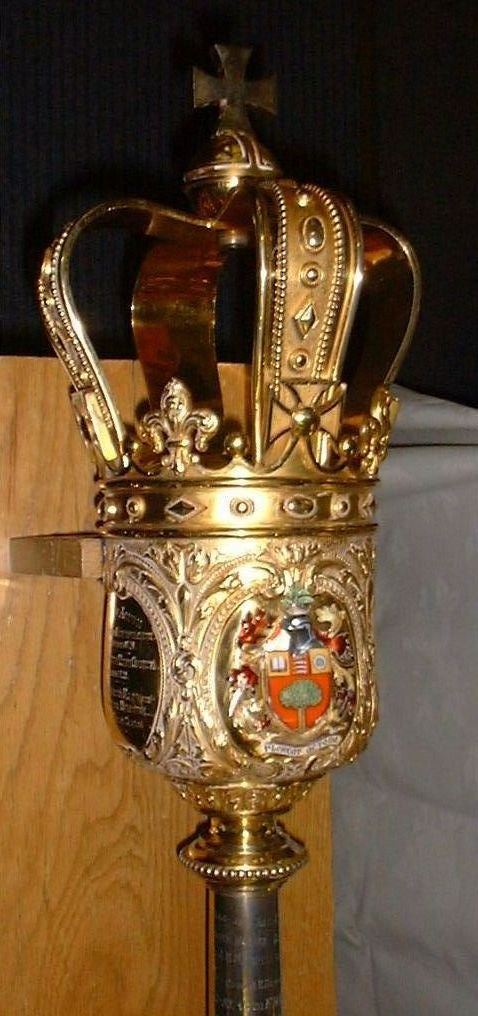
Acton Borough Mayoral Mace.
 There has been a market in Acton since medieval times, and the facilities for trading and shopping have grown to reflect the growth of the town. The 1920's and 1930's were probably the greatest times for shopping in Acton. In Crown Street, there were an open market and a substantial covered market hall built and owned by the Poore family, who operated a large ironmongers business in the High Street.
In the latter part of the 19th century, a considerable number of small laundries opened serving the needs of the hotels and the wealthy living in the West End. Heavy industry came in the early 1900's as companies expanded and relocated to the outskirts of London where there was space to develop, but with good transport links to raw materials, customers and for the work force. The two key areas were Acton Vale, and Park Royal. Acton was described in the 1920's as the "Motor Town" and reported by the Times in 1956 as having one of the two largest concentrations of industry south of Birmingham. In 1932 the motor industry employed 5,400 people, some 80% of the workers in the district.
The industrial areas of Acton Vale became available at the turn of the century, and comprised parts of the common fields which had initially been used for the making of bricks. The area was free of the building restrictions imposed inside the London County Council area, and therefore an attractive and economic site creating a cluster of large developments including Napiers (engines and vehicles), Wilkinson Sword (swords, razors, vehicles), CAV and Lucas (automobile components), Evershed and Vignoles - (electrical test equipment), Du Cros (Cars) and Eastmans (Dye).
Ten years later, a further cluster of industries developed at Park Royal in north Acton, serving the needs of companies at the Vale, on the former site of the Royal Agricultural Society Show (1903-6). The site was used as an airfield from 1909 until 1913. During the War, the site was taken over as a munitions factory. Roads in the area commemorate some of the cars manufactured in the area. Major manufacturers were Guinness (Beer) The Rootes Group and Park Royal Vehicles (bus bodies), and many other automobile component manufacturers. The former Acton Aerodrome, slightly to the south, was also developed by companies that included the Alliance Aeroplane Company (Aircraft) and Renault (Cars),
The heavy industry moved away from Acton during the 1950's and 60's. Recent changes in shopping habits have caused a decline in the trade of the town. Acton is now changing, with media and lighter industry taking over from the heavy industry. With easy access to Central London, Acton remains a popular place to live, with new housing being built at many sites.