

Sophocles' Antigone
How old is Antigone?
- On this page : Discussion : how old was Antigone?
- On other pages :
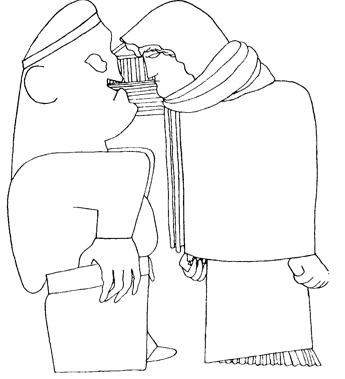
Jean Cocteau's drawing (right) symbolises the image that many people have of the confrontation between Antigone and Creon. Two adults locked in dispute, head to head...
Many of the problems in understanding this play disappear whren you realise that Antigone is a very young girl. She is betrothed, but unmarried. Athenian girls (yes, I know Antigone was a Theban! There are theories that say the Theban setting of the three plays is relevant, that Sophocles was portraying the "other" society, but I don't think so)- Athenian girls could be betrothed when very young indeed (any time after birth, in fact) - and necessarily before menarche. Marriage could then be quickly processed as soon as her periods began, and she was properly marriageable (ie able to conceive).
 Thus Antigone should be thought of as a
Thus I find it highly unlikely that the male Athenian audience will sympathise with Antigone at the start of the play. She seems like a typical wild and undisciplined child, defying her elders and making scenes! Having lost her parents, such behaviour would seem even more natural. And so we don't take her too seriously when she says she'll bury her brother's body, and tries to involve herself in polis matters which don't concern a woman.
![[Previous Page?]](next.gif)